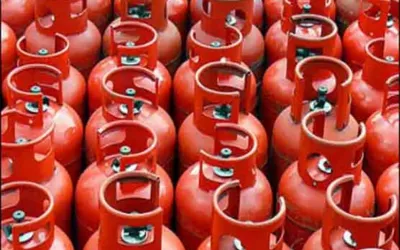
The reported hesitation over importing roughly $2 billion of LNG for winter is being framed as a bureaucratic delay. That framing is too narrow.
The real issue is that Pakistan has built an energy system in which a seasonal cold snap can rapidly become a balance-of-payments, fiscal, industrial, and political crisis at the same time.
A seasonal problem with year-round causes
Pakistan’s gas demand is projected to nearly double in winter, from about 850 million cubic feet per day (mmcfd) to 1,600 mmcfd, with demand on the SNGPL network rising from 550 mmcfd to 1,100 mmcfd. That seasonal spike collides with a shrinking indigenous gas base and an import-dependent supply chain.
Domestic production has been declining: PACRA estimates it fell from about 24.0 million tonnes in FY24 to 22.2 million tonnes in FY25, while LNG imports stood at about 7.8 million tonnes in FY25.
The same analysis projects the gas mix could shift dramatically over time, from roughly 75:25 indigenous-to-imported gas in FY24 toward 25:75 by FY32.
In other words, Pakistan is not merely facing a “winter shortage”; it is becoming structurally dependent on imported fuel precisely when its capacity to pay for it is most constrained.
The LNG supply chain is fragile
LNG is not a simple substitute for domestic gas. It requires timely cargo procurement, foreign exchange, shipping and port capacity, regasification terminals, pipeline integration, and a utility system able to absorb expensive fuel without passing the full cost to consumers.
A disruption at any point becomes a nationwide supply disruption.
That fragility is visible in the current plan. Pakistan reportedly needs about 22–24 cargoes for November 2026 to February 2027, while Qatar’s force majeure has pushed expected deliveries into November, increasing reliance on costlier spot purchases.
The Pakistan GasPort terminal reportedly suspended operations from October 9 due to insufficient LNG inventories, before resuming after fresh Qatari cargoes arrived. This shows how quickly the physical chain can seize up when cargo flows are interrupted.
The supply risk is compounded by price risk. Long-term Qatari supplies were expected at roughly $12 per MMBtu, but a shift toward spot purchases could materially raise the landed cost; one report says officials may cap spot purchases at $30 per MMBtu. At an average of $87 million per cargo, 22 cargoes imply close to $2 billion in import spending over four months.
Fiscal constraints make “buy more LNG” costly
The government’s reluctance is understandable. Pakistan’s gross official foreign-exchange reserves were just above $21 billion, even after raising $3 billion through Eurobonds ahead of a major debt payment.
The country received $5.4 billion in external loans during July–September, underscoring its continued dependence on external financing.
But the deeper constraint is domestic. Pakistan’s gas-sector circular debt stood at Rs3.631 trillion as of June 30, 2026, with another Rs1.823 trillion in outstanding payables to indigenous gas and LNG suppliers, bringing the broader liability to Rs5.454 trillion.
Payables to LNG suppliers alone were reported at Rs344 billion. This means every additional LNG cargo not only consumes foreign exchange; it can also add to a system already unable to recover costs fully or pay suppliers promptly.
The IMF has treated gas-sector circular debt as a systemic fiscal vulnerability rather than a routine utility problem. Its review reportedly flagged the debt’s rise to Rs3.4 trillion by December 2025, about 2.7 percent of GDP, and noted that late-payment surcharges and financing costs can make the stock self-expanding.
Winter LNG imports therefore sit at the intersection of three constraints: external reserves, IMF-programme targets, and a loss-making domestic gas chain.
The real cost is industrial disruption
Curtailing gas to factories may look like a short-term load-management tool, but it carries economy-wide costs. The proposed hierarchy prioritises households during cooking hours while placing industry, power, fertiliser, CNG, and cement on an “as-available” basis; in severe shortages, CNG, cement, and industry could be curtailed.
The fertiliser impact is especially serious. The article notes that closure of Fauji Fertiliser Bin Qasim, FatimaFert, and Agritech could create a shortfall of 109,000 metric tonnes of urea per month.
That would raise the prospect of imported urea, higher food-production costs, and renewed pressure on the external account, defeating part of the purpose of limiting LNG imports in the first place.
There is also a competitive cost. Export-oriented industry already faces high energy costs and unreliable supply; further winter curtailment risks reducing output, employment, and export earnings.
A policy that protects households in the short run but damages industry for months may simply relocate the social and economic distress rather than eliminate it.
Why delay can be more expensive than action
Late procurement does not merely postpone a bill; it can raise it. Cargo markets are time-sensitive, and a government forced into spot purchases after a supply disruption usually pays more than it would under planned procurement.
The Petroleum Division had sought authorisation to begin arranging cargoes in early October, including four from Azerbaijan, four through PSO-led arrangements, and three from a US-nominated supplier.
Missing those windows narrows options and increases reliance on whichever supplier can deliver quickly.
At the same time, importing the full volume without a credible payment and cost-recovery plan could worsen circular debt and strain IMF-related external-account commitments.
The dilemma, then, is not “import versus do not import.” It is how to import enough to prevent a supply collapse while avoiding another round of unfunded liabilities.
A better policy direction
Pakistan needs a winter plan that is more than a cargo count. Four elements should anchor it:
- Transparent procurement: Publish the number of cargoes, suppliers, prices, delivery windows, and financing sources before contracts are finalised, reducing perceptions of ad hoc decision-making.
- Targeted protection: Prioritise households, but provide a predictable minimum-supply framework for fertiliser and export-oriented industry rather than open-ended curtailment.
- Cost honesty: Ensure that incremental LNG costs are recovered through a clearly designed, targeted mechanism rather than being silently absorbed into circular debt.
- Demand-side action: Accelerate metering, leakage reduction, efficiency standards, and a credible transition plan for captive power and industry, since every cubic foot saved reduces import exposure.
The government’s reported reform agenda, restructuring the gas sector, addressing cross-subsidies, unaccounted-for-gas losses, and developing a more competitive market, is directionally correct. But reforms will not solve this winter. They can, however, determine whether next winter is managed through policy or again through emergency cargo purchases.
Outlook
The near-term outlook is tense but manageable only if Pakistan secures sufficient cargoes early, protects fertiliser and essential industry, and avoids adding unaffordable liabilities.
A reduced import target may conserve foreign exchange, but it raises the probability of industrial shutdowns, fertiliser shortages, and public frustration during peak winter.
The medium-term outlook is more concerning. Falling local production, rising import dependence, a Rs5.45 trillion gas-sector liability complex, and limited fiscal space mean Pakistan cannot indefinitely treat LNG as a stopgap.
Without investment in domestic exploration, pipeline efficiency, storage, flexible contracts, and a financially sustainable pricing system, every winter will become a recurring test of the country’s external stability.
Pakistan’s choice is not simply whether to spend $2 billion on LNG. It is whether to continue paying for an energy model that converts cold weather into a macroeconomic emergency, or to reform the system before the next winter makes the choice for it.