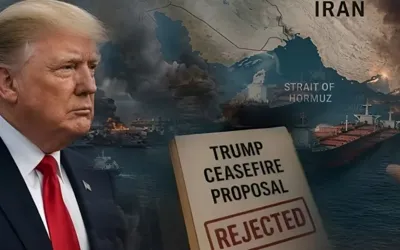
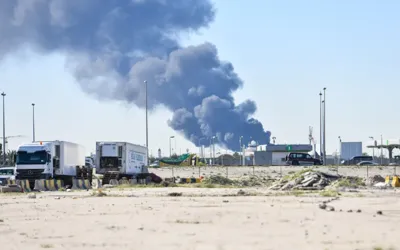
DUBA: Iran tightened its grip on the Strait of Hormuz Wednesday, targeting vessels and widening maritime restrictions as oil prices surged above $101 a barrel.
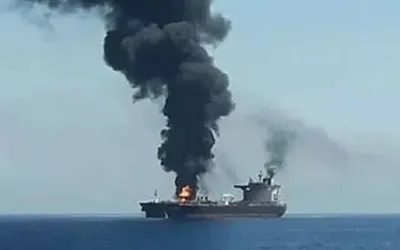
Iran’s Islamic Revolutionary Guard Corps said it targeted 20 vessels attempting to navigate the strategic waterway, including two U.S. vessels, eight oil tankers and 10 commercial ships that Tehran said had violated its restrictions, according to Iranian state media.
The United Kingdom Maritime Trade Operations, or UKMTO, said multiple vessels in the Gulf and Gulf of Oman were subjected to disabling fire during military engagements.
The escalation came a day after U.S. forces destroyed five Iranian crude oil carriers, prompting Tehran to intensify its maritime blockade in what it described as retaliation.
The Strait of Hormuz is one of the world’s most important energy routes, and prolonged disruption could affect global oil supplies, shipping and energy prices.
The IRGC also expanded its declared “prohibited zone” to parts of the Gulf of Oman and the Arabian Sea.
IRGC spokesman Hossein Mohebi warned on Iranian state television that vessels entering the expanded area without coordination with Iranian authorities could face military action and sanctions.
The move extends Iran’s maritime restrictions beyond the Strait of Hormuz and raises concerns among shipping operators and energy markets.
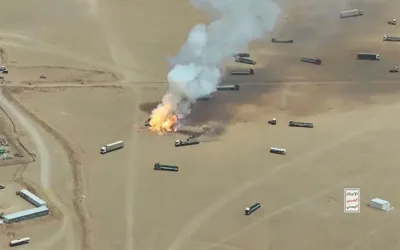
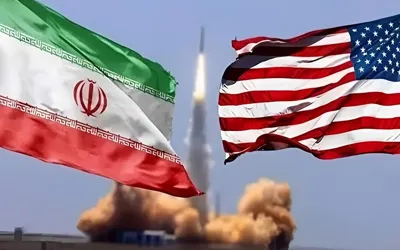
Iran also launched a ballistic missile attack against a U.S. military facility near Al Azraq in Jordan, saying it was retaliation for the destruction of its oil carriers.
Jordanian defense forces said they intercepted 18 incoming projectiles.
The military escalation coincided with a major diplomatic development in Vienna, where the International Atomic Energy Agency’s Board of Governors voted 23-3 to refer Iran to the United Nations Security Council over its nuclear noncompliance.
The resolution, backed by the United States, Britain, France and Germany, cited Iran’s refusal to allow international inspectors access to enriched uranium stockpiles.
Russia, China and Niger voted against the measure.
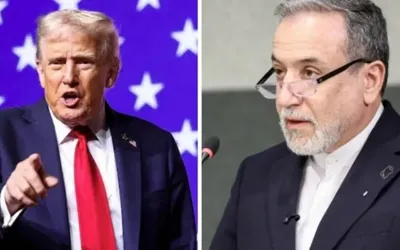
Iranian representative to the IAEA Reza Najafi rejected the resolution as a political maneuver driven by Washington.
The referral marks the first such action by the IAEA board in two decades, adding diplomatic pressure to an increasingly tense military confrontation.
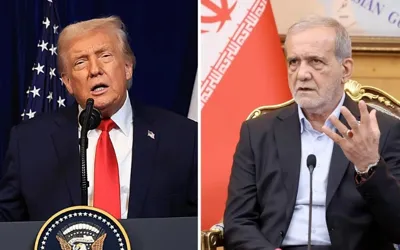
In Washington, President Donald Trump said the conflict would end “immediately after” the November midterm elections, accusing Tehran of trying to influence U.S. domestic politics.
However, The Wall Street Journal reported that senior Trump administration advisers have privately warned that the conflict could continue through the remaining two years of Trump’s term.
Trump has said the U.S. military campaign is intended to prevent Iran from developing a nuclear weapon. He has also predicted that oil prices will fall once the conflict ends.
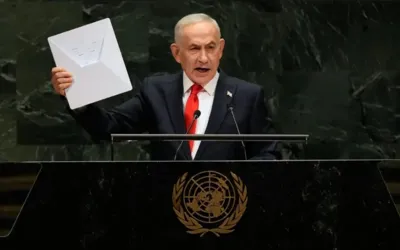
Meanwhile, Israeli Prime Minister Benjamin Netanyahu said during a visit to troops in southern Syria that continued military pressure was bringing Iran’s government closer to collapse.
The conflicting signals have added to uncertainty over how long the confrontation will last and whether diplomatic efforts can prevent further disruption in the region.
For global markets, the widening maritime restrictions remain a major concern. Any sustained disruption around the Strait of Hormuz could push up energy costs, disrupt shipping and keep oil prices elevated.