NEW YORK: Dozens of delegates walked out of the U.N. General Assembly on Thursday as Israeli Prime Minister Benjamin Netanyahu defended Israel’s actions in Gaza and across the region, while hundreds of protesters rallied outside the U.N. headquarters against his appearance.
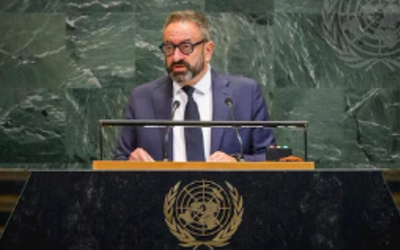
The walkout began as Netanyahu took the podium for his address to the 81st session of the General Assembly, leaving large sections of the chamber empty. Netanyahu called the departing delegates “moral cowards” and challenged other critics to leave as well.
Netanyahu used his roughly 40-minute speech to defend Israel’s military actions and reject allegations that Israel had committed genocide in Gaza. He said Israel was defending itself and described the country as facing threats on multiple fronts, including from Iran and other regional actors.
He also criticized Western European leaders over their opposition to Israel, accusing them of succumbing to what he called “antisemitic mobs.” Netanyahu accused Qatar and Türkiye of spreading what he described as lies about Israel.
A significant part of the speech focused on New York City Mayor Zohran Mamdani, who has accused Netanyahu of being responsible for alleged crimes against Palestinians. Netanyahu called Mamdani “the antisemitic mayor of New York” and accused him of spreading false claims about Israel.
Mamdani responded after the speech, accusing Netanyahu of repeating what he called “baseless lies” about Israel’s conduct in Gaza. He also pointed to the International Criminal Court arrest warrant against Netanyahu, which alleges war crimes and crimes against humanity. Netanyahu rejects the allegations.
The ICC issued the arrest warrant against Netanyahu in November 2024. The court also issued a warrant for former Israeli Defense Minister Yoav Gallant over alleged war crimes and crimes against humanity in connection with the Gaza conflict.
Protests outside U.N.
The confrontation inside the General Assembly was mirrored outside the U.N., where several hundred demonstrators gathered before and during Netanyahu’s speech.
A protest organized by Jewish Voice for Peace drew about 200 people, according to Reuters. Demonstrators blocked traffic near the U.N. and chanted against Netanyahu and U.S. support for Israel. Police ordered protesters to clear the roadway before making arrests.
At least 30 people were arrested during the protest, including actors Susan Sarandon and Hannah Einbinder, Democratic congressional candidate Darializa Avila Chevalier and New York City Council member Chi Ossé, according to Reuters.


Other demonstrations involved Palestinian supporters, Jewish organizations critical of Netanyahu’s government, Muslim and Jewish activists and anti-Zionist Orthodox Jewish protesters. Pro-Netanyahu demonstrators also gathered nearby, reflecting divisions among Jewish groups over Israel’s policies.
The protests came amid growing international criticism of Israel’s conduct in Gaza. Demonstrators called for an end to U.S. support for Israel and demanded accountability over allegations of violations during the conflict.
Political pressure at home
Netanyahu’s appearance came ahead of Israel’s Oct. 27 election, adding a domestic political dimension to his U.N. address. He used the speech to highlight Israel’s military confrontations and praised U.S. President Donald Trump as a key partner.
“We will continue to defend our state. We will continue to win because we have no other choice,” Netanyahu said.
His visit to New York was unusually brief. He arrived Thursday morning for the U.N. address and was scheduled to return to Israel later that day rather than remain in the city overnight.
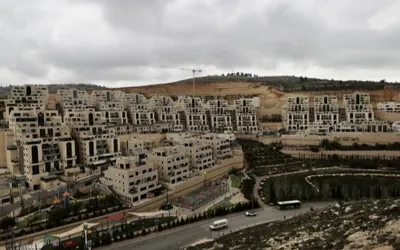
Netanyahu also criticized European governments over measures targeting Israeli settlements in the occupied West Bank, describing their approach as “weakness” and “appeasement.”
He addressed violence by Israeli settlers in the West Bank as well, saying Israel would not tolerate vigilantism and describing the country as governed by law.
The scenes inside and outside the U.N. highlighted the divisions surrounding Israel’s war in Gaza: diplomats left the chamber as Netanyahu spoke, protesters confronted police outside and the Israeli prime minister used the international platform to defend his government’s actions amid mounting criticism abroad and an election campaign at home.