DUBAI: Attacks on commercial shipping and energy infrastructure are intensifying across the Gulf, raising fears for maritime security as the widening conflict involving Iran, the United States, Israel and Yemen’s Houthis threatens vital shipping routes and regional stability.
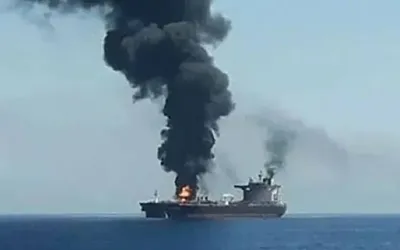
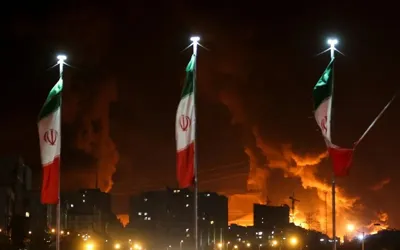
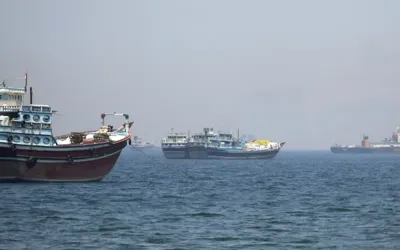
Iran’s Islamic Revolutionary Guard Corps (IRGC) Navy said four oil tankers had caught fire and exploded in the Strait of Hormuz, while maritime security agencies reported additional attacks on commercial vessels. Meanwhile, Yemen’s Iran-aligned Houthi group claimed strikes on Saudi energy facilities, further expanding the conflict’s reach.
The escalation comes as diplomatic efforts continue to seek an agreement between Washington and Tehran, with regional powers working to prevent the fighting from spreading further.
Tanker attacks heighten risks in Strait of Hormuz
The IRGC Navy said a fourth tanker carrying more than 2 million barrels of crude oil had struck a naval mine, triggering a powerful explosion and fire, according to Iranian state media. An earlier statement reported that another tanker carrying 2 million barrels of crude had also hit a mine.
Reuters could not independently verify the Iranian military’s claims.
Separately, the United Kingdom Maritime Trade Operations (UKMTO) agency reported that a crude oil tanker had been struck by an unknown projectile while sailing out of the strait.
In another incident, UKMTO said a vessel was hit on its port side about 40 nautical miles (74 kilometers) south of Iran’s Lavan Island, causing a fire onboard. The crew were reported safe, with no environmental impact.
It remained unclear whether the vessels mentioned in the UKMTO reports were among those cited by Iran.
Reuters also reported that UKMTO had received information about a tanker struck by explosive devices attached to a small boat. Maritime sources described the incident as the first known successful limpet-mine attack in the waterway since the US-Israeli war with Iran began in February.
The Strait of Hormuz connects the Gulf to the Gulf of Oman and the Arabian Sea. Before the conflict, roughly one-fifth of the world’s oil supplies passed through the strategic passage, making any disruption a major concern for international shipping.
Iran and US exchange claims over maritime operations
Iranian state media reported that its forces had downed and captured an MQM-170 US drone over Qeshm Island, near the Strait of Hormuz. Tehran also claimed it had destroyed an unmanned US vessel in the eastern part of the waterway.
The US military’s Central Command rejected the latter claim, saying all American unmanned surface vessels in the Middle East were accounted for, including a squadron of advanced sea drones operating in the region.
The incidents come amid reports that Iran has intensified attacks on commercial shipping around the strait to increase pressure on Washington.
Maritime intelligence service Marisks reported at least seven tanker-related incidents during a week in early October, including attacks on vessels in the Strait of Hormuz, raising concerns over the security of Gulf shipping.
Houthi attacks widen conflict to Saudi Arabia
The maritime crisis has coincided with renewed Houthi attacks on Saudi Arabia, opening another front in the widening regional conflict.
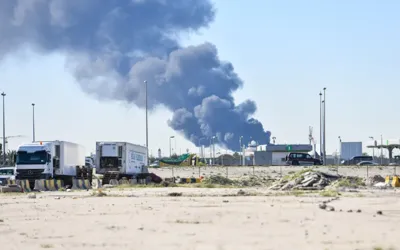
The group said Thursday it had targeted several Saudi energy facilities, including the Ras Tanura and Rabigh refineries and a production facility at Abqaiq owned by state oil giant Saudi Aramco.
A Saudi-led coalition said it had intercepted a cruise missile launched toward the kingdom’s western region.
The claims followed a series of Houthi attacks on Saudi airports, oil installations and other critical infrastructure. Reuters reported that an Oct. 10 attack on Riyadh’s King Khalid International Airport killed 13 people and wounded more than 300.
The Houthis have threatened further strikes on Saudi airports and oil facilities, warning civilians, workers and shipping companies to stay away from sites they consider legitimate targets.
The attacks have severely disrupted Saudi aviation. Aviation analytics firm Cirium reported that 4,071 of 4,736 scheduled flights at Riyadh’s airport were canceled between Oct. 8 and Oct. 25. More than 7,800 flights, accounting for 45% of scheduled departures across Saudi airports, were also canceled during the same period.
The United States on Friday confirmed it had ordered non-emergency government employees and their family members to leave Saudi Arabia, effective Oct. 23, citing security risks from Houthi attacks on civilian airports and critical infrastructure.
The US Embassy in Riyadh warned American citizens of possible further attacks, airspace closures, flight cancellations and other travel disruptions.
The fighting between the Houthis and the Saudi-led coalition backing Yemen’s internationally recognized government has intensified in recent weeks. A truce between the sides collapsed in July, and the Houthis subsequently declared a naval blockade of Saudi Arabia, attacked Saudi vessels and the East-West pipeline, and seized Yemen’s Red Sea coastline and the Bab el-Mandeb Strait, according to Reuters.
Regional powers intensify diplomatic efforts
The military escalation has continued despite diplomatic efforts to prevent the conflict from spreading further.
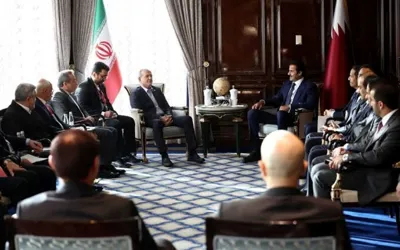
Qatari mediators returned to Tehran on Friday as part of coordinated efforts to reach an agreement between Washington and Tehran, an official briefed on the discussions told Reuters.
US President Donald Trump said Thursday that Vice President JD Vance had reached out to Iran to help it obtain medical supplies. The move followed reports that Vance had written to Iran’s top security official in an effort to revive peace negotiations.
Iran confirmed receiving the letter but had yet to respond, according to the semi-official Tasnim news agency. Tehran has said Washington must meet its conditions for an agreement.
Earlier in the week, Saudi, Turkish and Pakistani officials met Iranian leaders in Tehran and agreed to continue discussions, although the agenda and substance of the talks have not been disclosed.
Pakistan’s military said Friday it was "cautiously optimistic" about Islamabad’s mediation efforts following two visits to Tehran this month by Army Chief Field Marshal Asim Munir.
Saudi Defense Minister Prince Khalid bin Salman and Turkish intelligence chief Ibrahim Kalin accompanied Munir during his latest visit.
The diplomatic engagement comes amid the Mecca Joint Defense Agreement signed by Pakistan, Saudi Arabia and Turkiye on Aug. 7. Under the agreement, an attack on one signatory is to be treated as an attack on all.
Pakistan’s military spokesman, Lt. Gen. Ahmed Sharif Chaudhry, said the agreement did not rule out additional members, including Iran, although any expansion would require approval from the signatories’ political leadership.
With Washington and Tehran yet to reach an agreement, attacks on commercial shipping, renewed fighting in Yemen and threats to Gulf infrastructure continue to complicate diplomatic efforts to contain the eight-month-old conflict.