A Pentagon assessment has warned that clearing the Strait of Hormuz of Iranian-laid naval mines could take up to six months, raising the prospect of prolonged disruption to one of the world’s most critical energy corridors and keeping global oil markets under sustained pressure, according to a report by the Washington Post.
The report comes amid escalating geopolitical tensions in the Gulf region, where maritime security has deteriorated following heightened friction involving Iran, the United States, and Israel.
The Strait of Hormuz through which nearly one-fifth of global oil and gas supplies transit has already experienced severe disruption, triggering volatility across international energy markets and raising concerns over long-term supply stability.
According to officials cited in the assessment, even in the event of a cessation of hostilities, the process of detecting and removing naval mines would require an extensive and highly complex operation before safe maritime traffic can resume.
The Pentagon reportedly noted that large-scale clearance efforts are unlikely to commence while active conflict persists.
During a classified briefing to the House Armed Services Committee, lawmakers were informed that Iran may have deployed approximately 20 or more naval mines in and around the strategic waterway.
Some of these devices are believed to be advanced, remotely controlled, and GPS-guided, significantly increasing the operational challenge for detection and disposal teams.
Although the Pentagon has not formally confirmed the reported figures, a spokesperson for the U.S. Department of Defense described portions of the information as “inaccurate,” according to media reports.
Iran’s Islamic Revolutionary Guard Corps has meanwhile declared the region a “high-risk operational zone,” spanning an estimated 1,400 square kilometres, and warned that additional unexploded mines may still be present.
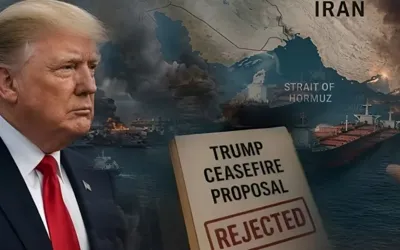
Iranian officials have further stated that the Strait of Hormuz will remain closed as long as U.S. naval forces maintain their presence in the region.
The evolving situation has intensified concern across global shipping and energy sectors, with major maritime operators cautioning that uncertainty over safe passage and the latent threat of underwater explosives is severely complicating logistics and trade routes.
Previous reports have also indicated that vessel movement through the strait has remained limited and highly cautious, with shipping companies reluctant to operate amid ongoing security risks.
In response to the crisis, military planners from more than 30 countries have convened in London to discuss the formation of a multinational defensive framework aimed at restoring maritime security.
The proposed initiative focuses on securing the Strait of Hormuz, enabling safe navigation, and coordinating large-scale mine-clearance operations once conditions stabilize.