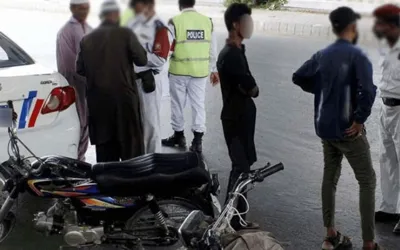
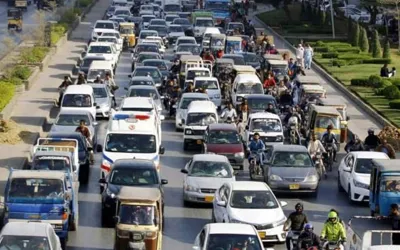
Every single morning, Karachi springs to life with a familiar rush. Thousands of residents step out of their homes, heading toward offices, universities, healthcare canters, and commercial hubs. Streets quickly overflow with traffic. As the fuel prices keep climbing higher, securing dependable daily transportation remains a persistent struggle for countless citizens.
What makes this situation particularly striking is that a vast majority of these individuals are traveling in the exact same direction, at nearly identical times. While some drive alone with empty seats in their personal cars, others scramble to find affordable transit alternatives, often bleeding a massive chunk of their monthly salaries just to get to work and back.
It naturally makes one wonder: why aren't we making smarter use of the vehicles that are already clogging up our asphalt every day?
Perhaps it is high time we embraced a simple yet highly practical concept, community-driven ride-sharing. This is not about launching a commercial service or a tech startup, but rather about encouraging a cultural shift toward shared commuting among people traveling along overlapping routes.
A simple idea that could make a real difference:
The core philosophy is remarkably straightforward. It bridges the gap between individuals sharing identical destinations, overlapping schedules, and matching transit routes, enabling them to team up for the daily ride.
Imagine a commuter driving every morning from Scheme 33 toward Tower, carrying empty seats in their vehicle. Simultaneously, someone living nearby in Saadi Town, Safoora, or Gulistan-eJohar is heading toward University Road or central Karachi. Rather than chasing separate transport options, these individuals can seamlessly share a convenient stretch of their journey together.
This exact opportunity echoes across countless neighborhoods throughout the city, whether it is Gulshan-e-Iqbal, Hassan Square, Jamshed Road, Tariq Road, Bahadurabad, or beyond. Crucially, this practice does not need to be restricted to any single institution or profession.
An office executive, a university lecturer, a hospital worker, a student, or a freelancer can all participate as long as their routes, timelines, and personal preferences align.
Starting without heavy financial cost:
One of the most promising aspects of this concept is that it demands neither an expensive mobile application nor a massive monetary investment right out of the gate.
Instead, it can easily kick off using everyday communication channels, such as pre-existing social circles, community groups, and localized coordination.
Interested participants can simply share essential details regarding their departure point, final destination, office hours, and whether they are offering empty seats or searching for a ride. Once a small cohort of commuters settles into a steady routine, they no longer need to look for fresh options every single morning.
This lean, community-led approach allows people to test the waters organically before anyone even thinks of sinking capital into commercial software or formal platforms. At the end of the day, the primary question isn't how fast we can launch technology, but whether citizens are ready to share their daily journey.
Convenience, Trust, and Fair Cost-Sharing:
For any ride-sharing arrangement to succeed, it has to genuinely benefit both drivers and passengers without demanding frustrating detours. Timings must be practical, and expectations must remain realistic.
Furthermore, a major draw of any such model is the chance to reduce individual transit costs, but financial contributions must remain balanced and fair. Gasoline is only one component; routine upkeep, tire wear, and vehicle depreciation are also part of car ownership.
When passengers chip in for a shared trip, their individual out-of-pocket expenses drop significantly compared to traditional transport, while drivers receive a fair offset for their daily commute expenses.
The goal is never to turn private car owners into commercial taxi operators, but to establish a sensible framework of mutual support.
Undoubtedly, the absolute cornerstone of shared commuting is trust and safety. Sharing a confined vehicle with others demands mutual confidence. Participants must rely on baseline verification, such as ID confirmations, active mobile numbers, and employment or student status, while ensuring strict privacy regarding personal data. The safety and comfort boundaries of female commuters require specialized attention and absolute respect.
Start small and scale gradually:
Karachi’s sprawling metropolis cannot be fixed overnight. A far wiser strategy for citizens is launching focused pilot projects involving tight-knit circles operating along just one or two high-demand routes.
A structured trial can reveal vital insights: how many residents show genuine interest, how often shared trips successfully happen, and whether the cost-splitting math feels fair to everyone. If these initial steps yield positive results, the practice can organically expand into other neighborhoods through grassroots coordination.
A better journey begins with cooperation:
Karachi’s gruelling transport crisis won’t vanish overnight due to any single intervention. Even so, practical initiatives that foster community teamwork certainly deserve our attention.
At its core, the solution rests upon a simple observation: every single day, thousands travel in identical directions while countless vehicles burn fuel with empty seats. If even a modest fraction of commuters begins pooling their rides through a well-regulated, trusted framework, it can offer a genuinely viable alternative to the isolation of traveling alone.
Perhaps the next breakthrough toward fixing our daily commute isn't just building another highway or adding another vehicle to the asphalt. Sometimes, it is simply unlocking the full potential of what we already own, together.
About Author:
Mubeen Haroon
MPhil - University of Karachi