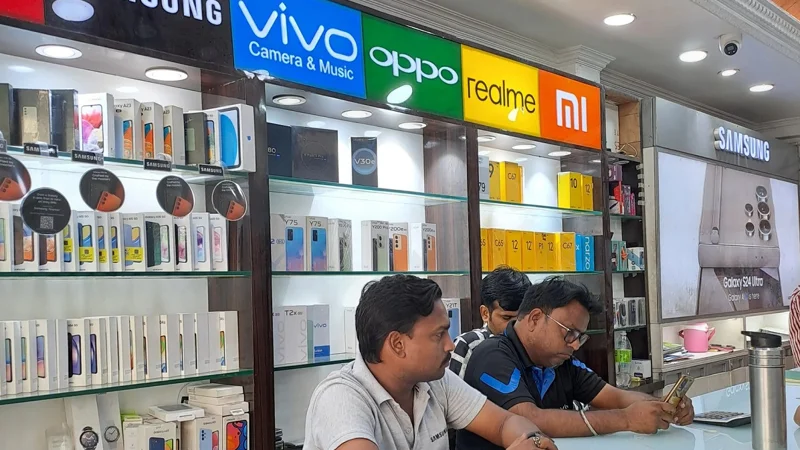
KARACHI: Smartphone users in Pakistan who face hefty taxes on their devices will now be able to pay the charges in monthly installments instead of a large one-time payment, offering some relief to consumers.
Under the new arrangement, users who previously faced Pakistan Telecommunication Authority tax bills of around 100,000 to 250,000 rupees ($360 to $900) will be able to pay approximately 8,000 to 17,000 rupees ($29 to $61) per month, according to Gilani, a lawmaker who has pushed for tax reductions.
He described the move as a step toward making the tax burden more manageable for consumers and said he would continue pushing for further reductions.
"We will continue fighting for greater relief and more concessions for the public," he said.
The push to reduce Pakistan's high mobile phone taxes gained momentum in June, with lawmakers arguing that mobile devices should be treated as essential tools rather than luxury items. The issue was raised in the National Assembly on June 11, when Gilani called for a review of the tax structure, saying high charges were making mobile phones less affordable, particularly for students and low-income users.
Federal Minister for IT and Telecommunication Shaza Fatima Khawaja also joined lawmakers in displaying placards carrying the message that mobile phones were a necessity, not a luxury.
Gilani said the taxation issue was linked not only to consumer affordability but also to Pakistan's digital divide, as mobile phones have become increasingly important for education, business, communication and access to online services. He argued that lowering taxes could make digital technology more accessible to a wider section of the population and reduce the financial barriers faced by ordinary consumers.
By June 22, Gilani said some progress had been made, describing recent changes in mobile phone taxation and registration policy as a step forward while maintaining that the ultimate objective should be the complete abolition of the PTA tax.
He said the government had reduced regulatory duty on imported mobile phones by 20%, with further reductions expected, while customs duties on mid-range devices priced between $200 and $300 had also been lowered. Gilani said the measures did not go as far as he had hoped but nevertheless provided some relief to consumers.
A key proposal emerging from the parliamentary discussions was an installment-based mechanism for paying mobile phone registration taxes. Gilani said an enabling provision had been included in the Finance Bill under which the Pakistan Telecommunication Authority and the Federal Board of Revenue would jointly develop a payment plan.
The proposed arrangement is intended to allow consumers to spread large PTA tax bills over monthly installments rather than paying the entire amount upfront.
Gilani said the installment facility could make it easier for consumers to register mobile phones that might otherwise remain unregistered because of high one-time payments. He said the proposal was aimed at reducing the financial pressure on users who may face bills running into 100,000, 150,000 or 200,000 rupees.
The developments followed months of parliamentary discussion over mobile phone taxation, with lawmakers continuing to press for broader reforms and, ultimately, the complete removal of the PTA tax.