WASHINGTON: President Donald Trump on Wednesday proposed new tariffs on 14 major U.S. trading partners, including China, Japan, India and the European Union, citing what his administration described as unfair trade practices and excess industrial capacity.
The proposed duties range from 10% to 40%, although the administration said actual rates would be capped at lower levels negotiated under existing or pending trade agreements.
China faces a proposed capped tariff of 20%, which would be added to duties of about 25% imposed during Trump's first term. The rate is consistent with a trade truce between Washington and Beijing that is due to expire Jan. 10, but could rise to 40% if the agreement collapses.
Vietnam would face a 20% tariff if it reaches a trade agreement with the United States, and 35% otherwise. Japan, South Korea, Taiwan, the European Union and Switzerland would face rates of 15%.
The proposed tariff for Cambodia, Indonesia, Malaysia, Thailand and Bangladesh is 18%. India would face a 17% rate if ongoing negotiations produce an agreement, rising to 25% otherwise. Singapore would face a 10% duty.
U.S. Trade Representative Jamieson Greer said the measures target industrial strategies focused on expanding manufacturing through practices the administration considers unfair.
The tariffs are expected to take effect following a public hearing scheduled for Jan. 25.
China rejected the allegations. Foreign Ministry spokesperson Guo Jiakun described claims of excess industrial capacity as a false issue and said Beijing opposed using them as a pretext for political manipulation.
The European Commission also rejected the suggestion that the bloc had structural overcapacity, saying the tariffs would remain capped at 15% under an agreement reached last year.
Separately, the United States proposed a 10% duty on Brazilian Embraer aircraft and higher tariffs on excess Brazilian sugar. Brazil was the only country covered by that investigation, while Mexico and Norway were excluded.
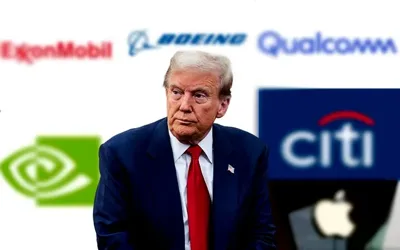
The announcement weighed on financial markets, with the Nasdaq falling more than 3% amid a sell-off in technology stocks.
A Reuters/Ipsos poll found that 62% of respondents supported overturning the tariffs imposed by Trump.