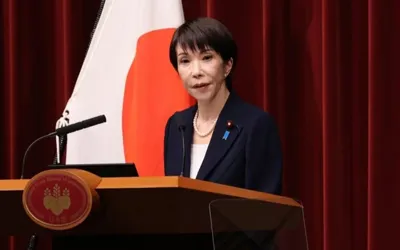
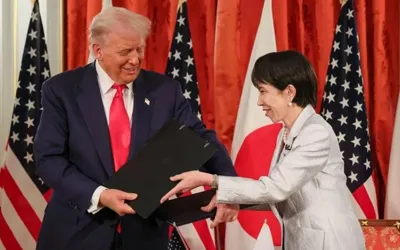
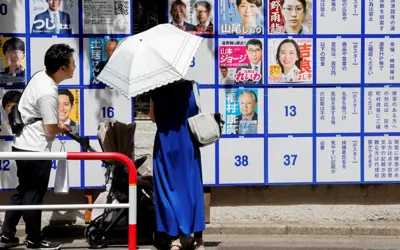
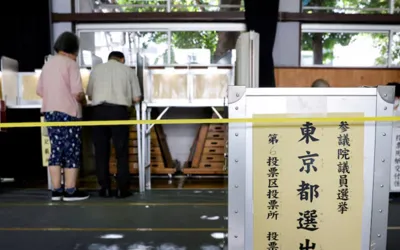
Sanae Takaichi, 64, a conservative stalwart of Japan’s ruling Liberal Democratic Party (LDP), made history in October by becoming Japan’s first female prime minister. Her victory in a parliamentary vote came on her third attempt at party leadership, cementing her role as a political force shaped by ambition, resilience, and ideological conviction.
A protégé of former Prime Minister Shinzo Abe, Takaichi has pledged to revive “Abenomics,” combining expansive public spending with loose monetary policy. Her premiership opens a window for Japan and Türkiye to strengthen a partnership that, while discussed during the Abe era, never fully flourished.
Strategic Complementarity:
Japan’s growing defense capabilities and relaxed export controls complement Türkiye's rapidly expanding defense industry. This convergence offers opportunities for joint development, enhancing both nations’ strategic autonomy.
Energy security represents another avenue for cooperation: Türkiye’s role as a regional energy hub aligns with Japan’s commitment to diversified energy sources—including Russian LNG—creating potential for structured dialogue shaping Eurasian energy dynamics.
Supply-chain resilience is another strategic point. The Middle Corridor connecting Türkiye to East Asia aligns with Japan’s efforts to secure critical minerals and reduce dependence on China. Collaboration in infrastructure and connectivity projects across Central Asia could emerge as a defining feature of a renewed Türkiye–Japan partnership.
Diplomatically, both Takaichi and President Erdoğan navigate volatile great-power politics with comparable flexibility. Their shared capacity to balance competing interests positions their countries as agile middle powers, able to bridge regions from the Eastern Mediterranean to the Indo-Pacific.
Takaichi’s Unconventional Path to Power:
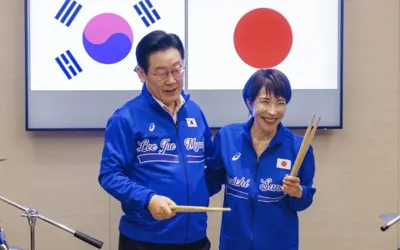
Born and raised in Nara to non-political parents, Takaichi led a colorful early life as a heavy metal drummer, TV host, scuba diver, and car enthusiast—her old Toyota Supra is now in a local museum. Her political awakening came during the 1980s while working for US Congresswoman Patricia Schroeder amid tense US–Japan trade disputes, an experience that convinced her of the necessity for Japan to defend itself independently of US opinion.
Elected to parliament in 1993, Takaichi joined the LDP in 1996, quickly rising as a vocal conservative. She held senior roles, including minister for economic security, trade and industry, and internal affairs and communications. After unsuccessful leadership bids in 2021 and 2024, she secured the premiership in 2025, promising schoolchildren she aspired to be Japan’s “Iron Lady” in the mold of Margaret Thatcher.
A staunch social conservative, Takaichi opposes married women keeping their maiden names and rejects same-sex marriage. Yet she has also championed policies informed by personal experience, such as childcare tax breaks, babysitting services, and enhanced care for women and the elderly.
Foreign Policy and Defense:
Takaichi has pursued a more assertive foreign policy than many of her predecessors, strengthening security partnerships, increasing defense spending, and advocating for a more active role for Japan’s Self-Defense Forces. While Abe’s Indo-Pacific strategies provide a foundation, Takaichi’s coalition with the Japan Innovation Party (Ishin) after Komeito’s departure grants her freedom to pursue bolder international policies.
Her appointments, including Shinjiro Koizumi as Defense Minister, reflect a careful balance: appealing to younger voters concerned about China and North Korea while maintaining conservative credibility. Diplomatically, her engagements, such as symbolic meetings with former US President Trump, demonstrate an ability to blend personal rapport with strategic purpose—upholding Japanese autonomy in trade, energy, and critical minerals.
Middle-Power Realignment:
Takaichi’s Japan operates in a fragmented, volatile world where middle powers increasingly shape outcomes. From energy insecurity and supply-chain vulnerabilities to conflicts in Ukraine and the Middle East, nations capable of multi-directional diplomacy are gaining influence. Türkiye, India, Indonesia, South Africa, and Brazil are asserting themselves similarly, emphasizing strategic autonomy while balancing relationships with major powers.
Japan’s approach mirrors this trend. Maintaining Russian LNG imports, boosting defence spending, and diversifying economic dependencies position Japan as a proactive middle power, capable of multi-vector engagement across the Indo-Pacific and Eurasia.
Opportunities for Türkiye–Japan Cooperation:
Türkiye sits at the heart of Eurasia; Japan lies on the Pacific edge. Strategic corridors connecting these regions—through Central Asian energy routes and maritime trade lanes—are gaining importance. As Türkiye pursues a multi-vector foreign policy, Japan emerges as a natural partner. Both countries can leverage complementary strengths in defence, energy, trade, and infrastructure to shape regional dynamics and assert influence as middle powers.
If seized, these opportunities could transform the Türkiye–Japan relationship from transactional engagement into a defining axis of strategic cooperation in the 21st century, spanning the Eastern Mediterranean to the Indo-Pacific.