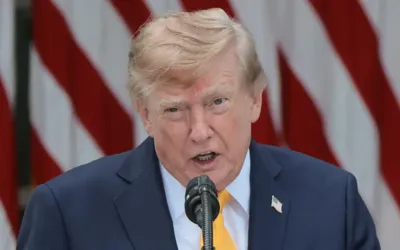
President Donald Trump asked Japanese Prime Minister Sanae Takaichi on Wednesday to tone down her recent remarks about Taiwan, according to The Wall Street Journal, which cited officials familiar with the conversations.
The sequence of calls has unsettled officials in Tokyo, who worry the U.S. may place its trade relationship with China above regional security concerns.
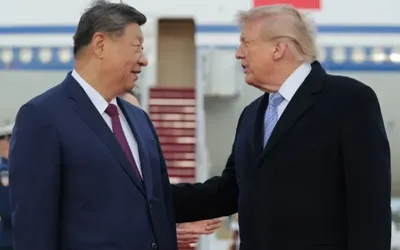
During the nearly hour-long discussion with Trump, Xi reportedly spent close to half the call criticizing Takaichi’s warning that Japan might join a military response if China moved against Taiwan.
Beijing emphasized that Taiwan’s “return” is central to the post–World War II international order and suggested that maintaining global stability is a joint responsibility of the U.S. and China.
Later that day, Trump phoned Takaichi and advised her to avoid further heightening tensions with Beijing. Although he stopped short of asking her to retract her statements, his call for a “lower volume” unsettled Japanese officials, who interpreted it as a sign that Washington might try to prevent Taiwan-related disputes from jeopardizing the newly stabilized U.S.-China trade relationship.
That trade deal includes Chinese commitments to purchase additional American agricultural goods — a politically important issue for Trump, who has repeatedly portrayed the farm-sector benefits as a major win.
In comments to The Wall Street Journal, Trump praised U.S.-China relations and highlighted the advantages for U.S. farmers. “Our relationship with China is very good, and that’s good for Japan, our close ally,” he said. “Anything that benefits farmers benefits me.”
Japan has not formally responded to the reported exchange.
Taiwan Strait Tensions:
Takaichi’s earlier comments, delivered on November 7, triggered an immediate backlash from Beijing, including retaliatory economic steps and incendiary remarks from a Chinese diplomat who posted that her “neck should be cut off.”
The flare-up occurred at a sensitive moment for Trump, who is trying to safeguard recent progress in trade discussions with Xi ahead of several meetings scheduled for next year.
Appearing before Japan’s parliament on Wednesday, Takaichi moderated her stance, saying she had not intended to describe specific scenarios related to a Taiwan conflict.
Experts say the order of Trump’s calls — speaking with Xi before Takaichi — may suggest a willingness to rein in a key ally on a central security issue to preserve economic momentum with China. “The order of the calls likely raised eyebrows in Tokyo,” said Matthew Goodman of the Council on Foreign Relations.
Although both the U.S. and Japan agree that Taiwan’s future should not be decided by force, economic frictions between Washington and Beijing have increasingly intersected with the strategic stakes in the Taiwan Strait.
A source familiar with the White House discussion said trade dominated Trump’s call with Xi, including concerns about delays in Chinese purchases of millions of tonnes of American soybeans. Trump later told reporters that Xi had agreed to speed up those purchases.
But for Xi, Taiwan remained the central topic. While he did not directly ask Trump to pressure Japan, his references to the postwar order were seen as a pointed reminder of Japan’s wartime past and Beijing’s sensitivity to Tokyo’s recent comments.
U.S. policy continues to oppose unilateral changes to the status quo in the Taiwan Strait, with the State Department labeling China “the single greatest threat to peace and stability” in the region.