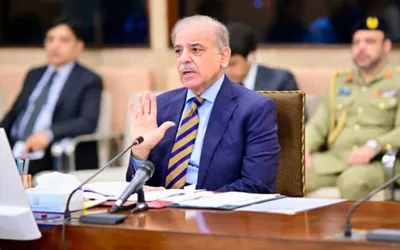
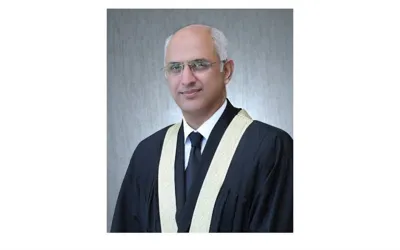
Prime Minister Shehbaz Sharif introduced Uraan Pakistan, a homegrown five-year National Economic Transformation plan.
The five-year plan aims to address key economic challenges through a targeted framework called the “Five Es” — Exports; E-Pakistan; Environment and Climate Change; Energy and Infrastructure; Equity and Empowerment.
The national economic program, "Uraan Pakistan," was launched in Islamabad in the presence of former federal ministers and representatives from all four provinces.
On this occasion, Prime Minister expressed his commitment to driving economic growth through increased exports.
Highlighting macroeconomic stability, he emphasized that the focus would now be entirely on targeted investments and reforms for development.
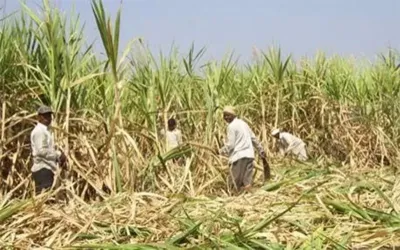
He stated that the success of the five-year plan, particularly aimed at the development of IT, agriculture, exports, mining, and mineral sectors, is linked to national unity, political harmony, and the collective efforts of political parties, institutions, and all stakeholders.
The "Uraan Pakistan" plan will serve as a comprehensive roadmap to transform Pakistan into a $10 trillion economy by 2035 and a $30 trillion economy by 2047.
The plan focuses on IT, manufacturing, agriculture, minerals, workforce, and the blue economy, setting an annual export target of $60 billion.
This program aims to promote small businesses, entrepreneurship, market diversification, and aligning locally produced goods with global quality standards. It seeks to ensure sustainable development by stabilizing the currency, reducing reliance on imports, and unlocking economic opportunities.
The E-Pakistan initiative will expand the freelancing industry, particularly in Information and Communication Technology (ICT), to $5 billion, producing 200,000 IT graduates annually.
This effort will foster a startup ecosystem, introducing Pakistan’s first unicorn platform. It will enhance mobile connectivity for over 100 million users, develop an artificial intelligence (AI) framework, and strengthen cybersecurity capabilities.
Under the climate change agenda, the government will address climate challenges and ensure sustainable resource management.
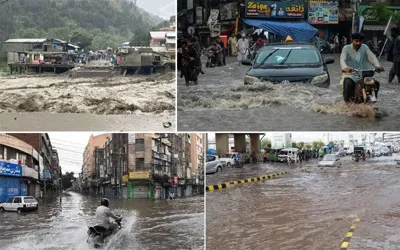
This initiative will reduce greenhouse gas (GHG) emissions by 50%, increase water storage capacity by 10 million acre-feet, expand arable land by 23 million acres, promote forest growth, protect biodiversity, and enhance disaster management capabilities.
In the energy and infrastructure sectors, the government aims to build modern infrastructure and increase renewable energy to 10% to ensure the supply of affordable and reliable power.
The plan also envisions increasing the share of rail in passenger transport from 5% to 15% and in freight transport from 8% to 25%, enhancing regional connectivity, and boosting mining capacity.
It outlines a vision for a "fair society for all" under the principles of transparency, equality, ethics, and empowerment.
Key targets of the program include increasing the Universal Health Coverage Index to 12%, raising literacy rates by 10%, empowering women by increasing their participation in the labor force to 17%, reducing youth unemployment to 6%, and promoting values-based governance.