Pakistan is a country of striking contrasts. While some have access to quality education, advanced health care and opportunities that reach far beyond its borders, millions struggle to secure the basics of everyday life.
Yet alongside this inequality exists a remarkable culture of generosity, with ordinary Pakistanis giving their time, money and resources to help others. The real challenge is not a lack of compassion but how to turn that compassion into lasting opportunity.
Nowhere is this contrast more apparent than in education. Elite private schools prepare students for admission to leading universities at home and abroad, while many government schools continue to operate with limited resources. As a result, a child’s prospects can depend heavily on where they are born, which school they attend and what resources their family can provide.
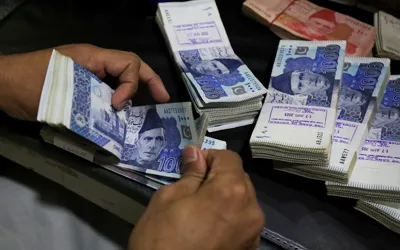
This inequality exists alongside something that is both remarkable and deeply Pakistani: an extraordinary culture of generosity. Millions of Pakistanis support others through cash, food, clothing, zakat, donations and volunteer service.
Charity is woven into social and religious life, particularly during Ramadan and Eid. Businesses also contribute significant amounts to charitable causes.
Author: The article was written by By Mekaeel Sadiq Gondal
Yet there is a paradox here. A society capable of such generosity continues to struggle with poverty and weak public provision in areas such as education and health care. The question, therefore, is not whether Pakistanis give enough. They clearly do. The more important question is whether enough of that generosity is being channeled toward addressing the structural causes of poverty.
A substantial share of charitable giving goes directly from one individual to another. This person-to-person support is valuable and often indispensable. It can pay for a family’s food, a child’s school fees, a medical bill or an urgent household expense. In many communities, it functions as an informal safety net where formal systems fail to reach those who need them.
But there is a limit to what this model can achieve on its own. When charitable resources are overwhelmingly directed toward immediate needs, they provide essential relief without necessarily creating the conditions for long-term mobility. A donation that feeds a family today is important; a donation that also enables a child to receive a quality education, acquire skills or access health care can change that family’s trajectory for years.
This does not mean personal charity is misplaced. On the contrary, the willingness of ordinary Pakistanis to help one another is one of the country’s greatest social strengths. It is a form of social capital that has repeatedly helped communities withstand economic hardship and national crises. The challenge is to complement this generosity with stronger institutions and more strategic philanthropy.
I was reminded of this recently when I visited a small secondhand bookshop to purchase books for underprivileged children in Rahim Yar Khan. I am working on a project to establish libraries in government schools, and when the shopkeeper, Mr. Aqeel, and his brother learned why I was buying the books, they refused to accept payment. They insisted that the books would be their contribution to the project.
What struck me was not simply the monetary value of the books but the instinctive generosity behind the gesture. They did not need to be wealthy to contribute. They simply wanted to be part of something that might benefit children who had fewer opportunities than others.
They also told me how their family had migrated from Gujarat to Pakistan and, starting with very little, built a home and livelihood here. Their story was a reminder that Pakistan’s history is filled with people who built their lives through resilience, sacrifice and mutual support.
This spirit exists across social classes. People with modest incomes often give beyond what might seem reasonable because helping another person is regarded as a social and moral responsibility. That generosity should not be taken for granted. It is an asset that Pakistan can build upon.
The opportunity lies in connecting this extraordinary culture of giving with long-term development. More charitable resources could be directed toward schools, libraries, vocational training, primary health care, scholarships and other initiatives that expand people’s capabilities. Greater transparency and stronger charitable institutions could also help donors understand how their contributions translate into lasting outcomes.
Pakistan does not suffer from a shortage of compassion. It suffers from a gap between compassion and institutional capacity. The country’s generosity already represents a powerful social resource. If even more of that generosity could be organized around education, health, skills and opportunity, charity could become more than a response to poverty. It could become part of the solution.
The generosity of Pakistanis is something to cherish. The greater task is to ensure that this generosity does not merely help people survive difficult circumstances but helps them build better lives. In a country of fractured realities, that may be one of the most promising bridges between the Pakistan we have and the Pakistan we want.