KARACHI: Pakistan's electricity regulator has approved a mandatory requirement for solar and wind power developers to pair their projects with battery storage before they can compete in the country's new wheeling auctions, while rejecting a competing industry proposal that would have allowed regulators more flexibility on bidding deadlines.
The National Electric Power Regulatory Authority, in a determination, signed off on three amendments to the Wheeling Auction Process that had been submitted by the Independent System and Market Operator of Pakistan (ISMO). The rulings cover battery storage requirements, proposal submission timelines and the makeup of a new grievance panel for auction disputes.
The wheeling auctions are part of Pakistan's Competitive Trading Bilateral Contract Market (CDBCM), a mechanism approved by the federal government last year that allows power producers to sell electricity directly to bulk power consumers while paying charges to use the national grid. NEPRA approved the underlying auction process in March for an aggregate wheeling capacity of 800 megawatts. The first auction round was later expanded from 200 megawatts to 400 megawatts with approval from the Ministry of Energy's Power Division.
Battery storage mandate set at 10%
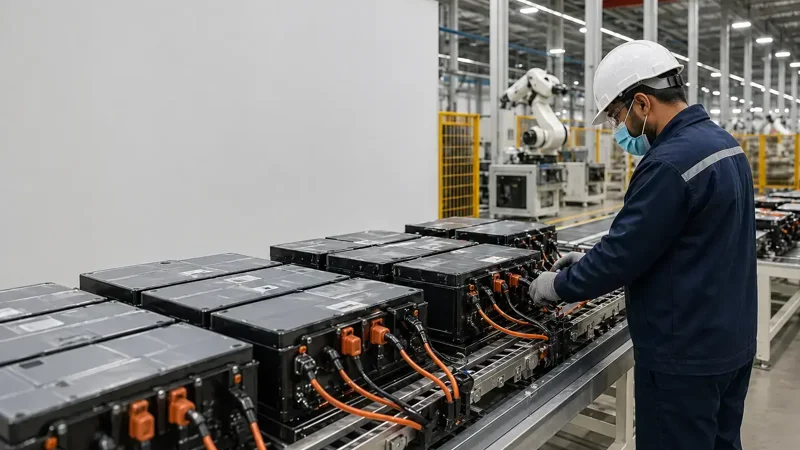
Under the approved amendment, any developer seeking to participate in the auctions using solar or wind technology must install a Battery Energy Storage System (BESS), with firm capacity equal to at least 10% of the firm capacity of its generation facility. For the 400-megawatt first auction, ISMO estimates that translates to roughly 40 megawatts, or 160 megawatt-hours, of battery storage.
ISMO told the regulator that pairing batteries with renewable projects would help offset Pakistan's "duck curve" problem, the swings in net electricity demand caused by fluctuating solar and wind output, though the operator's own simulations projected only modest system-wide gains, with curtailment reductions of about 1.1 percentage points for solar and 0.3 percentage points for wind.
The financial case was stronger. ISMO's modeling showed equity internal rates of return climbing for both solar and wind projects once battery storage was added. A solar project serving certain commercial and industrial consumers, for example, saw its projected return rise from about 16.85% to 18.16% with a 10% battery component, and higher still at larger battery shares, according to figures ISMO submitted to the regulator.
Some stakeholders, including the National Energy Academic Network and independent power consultant Rehan Javed, had pushed for a higher 20% threshold during public consultation, arguing it would do more to address grid reliability. Others, including the Rawalpindi Chamber of Commerce and Industry, opposed the mandate altogether, warning that battery costs could be passed on to consumers and hurt industrial competitiveness.
NEPRA sided with ISMO's more cautious approach, finding the 10% level "proportionate for the first Auction" and noting that a steeper requirement risked discouraging participation, particularly among smaller developers. The regulator ordered ISMO to publish its supporting financial models on its website before the first request for proposals is issued and to revisit the threshold once more operational data is available.
Fixed deadlines replace discretionary extensions
NEPRA rejected ISMO's original plan to let the operator grant case-by-case extensions of up to one month to the deadline for submitting auction proposals. Stakeholders, including Javed and the National Energy Academic Network, had raised concerns that discretionary extensions could be applied unevenly or lack transparency.
Instead, the regulator ordered a fixed, non-extendable submission window: two months from the publication of the request for proposals for the first auction, and one month for all subsequent auctions. NEPRA said the fixed timeline offered "greater certainty, transparency, equal treatment and predictability" than a system reliant on discretionary extensions.
Grievance panel restructured for independence
The determination also revisits the composition of a new Grievance Redressal Committee that ISMO proposed to handle eligibility disputes from auction participants, a reversal from ISMO's earlier stance during the original auction-process proceedings, when it had argued a separate grievance body was unnecessary.
ISMO's revised plan called for the panel to be chaired by its own chief executive, alongside two independent members of ISMO's board of directors. NEPRA found that arrangement fell short of the independence the committee was meant to provide, noting that ISMO's Auction Committee is itself chaired by a senior ISMO official, meaning both the original eligibility decisions and any review of those decisions would remain inside ISMO's management structure.
The regulator instead ordered that the grievance committee be chaired by the managing director of the Private Power & Infrastructure Board, a separate government body, alongside the same two independent ISMO board members. NEPRA also required that the PPIB's representative on the Auction Committee be a different individual than the managing director chairing the grievance panel, to avoid overlap.
The existing timelines were kept in place, participants will have five business days to file a grievance after eligibility results are published, and the committee will have four weeks to decide.
NEPRA also ordered that the committee's decisions be published in full rather than only in summary form, as ISMO had proposed, and specified that eligibility rulings become final and binding once the grievance window closes or a decision is issued, with no further right of appeal within the auction process.