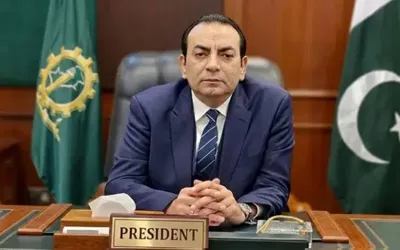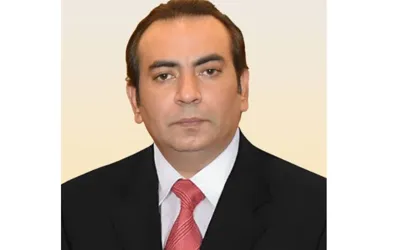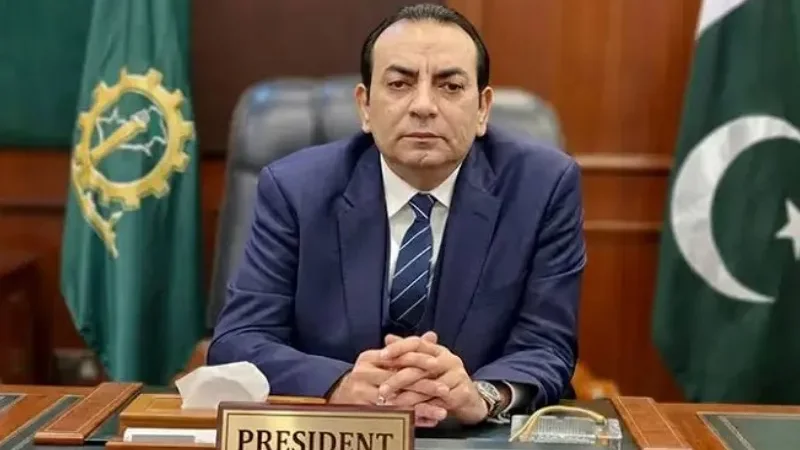
KARACHI: President of the Federation of Pakistan Chambers of Commerce and Industry (FPCCI) Atif Ikram Sheikh has voiced severe alarm over the concerning trajectory of Pakistan’s trade balance during the first two months (July-August) of the Fiscal Year 2026-27 (FY27) as country’s trade deficit widened by 18.1 percent to $7.1 billion in this period as compared to the $6.025 billion in the same period last year.
While acknowledging a slight recovery in overall economic activity, the FPCCI Chief highlighted that the increase in exports has been drastically outpaced by a surge in imports; warning that the resulting trade deficit poses an immediate threat to the country's macroeconomic stability and foreign exchange reserves.
Atif Ikram Sheikh emphatically stated that the failure of exports to keep pace with rising imports is not due to a lack of industrial capacity or entrepreneurial intent; but, it is the direct result of the crippling cost of doing business.
He noted that export-oriented industries are being pushed to the wall, rendering them entirely uncompetitive against regional peers in global markets.
The FPCCI President outlined critical bottlenecks that are devastating industrial productivity, starting with prohibitive interest rates. The central bank's exceptionally high policy rate remains an absolute barrier for the smooth functioning of trade and industry.
No industry can operate at a profit margin high enough to service such expensive loans; which has stalled private sector credit growth and prevented manufacturers from securing working capital or investing in essential long-term modernization, he added.
Atif Ikram Sheikh stressed that successive and unabated upward revisions in electricity tariffs, driven by massive capacity charges and cross-subsidization burdens, have made it impossible for factories to scale-up production. FPCCI leadership stressed that without a regionally-competitive power tariff, key export sectors will continue to underperform and lose global market share.
Atif Ikram Sheikh explained that the disruptions and cost of gas supply have eroded the narrow profit margins exporters rely on to secure international orders.
Additionally, elevated petroleum prices continue to act as a major hurdle, triggering a multiplier effect on inland logistics, supply chains, and goods transportation – heavily inflating the final cost of exportable goods before they even reach the ports.
Atif Ikram Sheikh highlighted that the domestic industries are burdened by the highest regional interest rates and exorbitant energy inputs, local manufacturing shrinks, and the economy inevitably pivots to expensive imports to meet domestic demand. This vicious cycle will lead to a wider trade deficit, a decline in export orders, and intense pressure on our national exchequer, he added.
The FPCCI leadership unanimously urges the Prime Minister, the Ministry of Finance, the Ministry of Commerce, and the State Bank of Pakistan to immediately sit down with the business community to devise a crisis-response strategy.
To prevent widespread industrial closures and rescue the FY27 export targets, the FPCCI demands an aggressive reduction of the policy rate to provide affordable capital for industrial production, immediate rationalization of electricity and gas tariffs to bring them at par with regional competitors, and targeted relief on petroleum levies for goods transportation to bring down domestic supply chain costs.