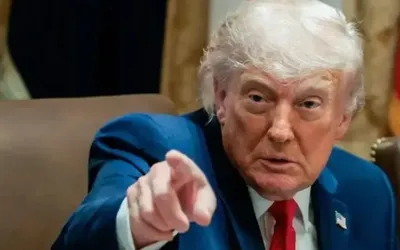
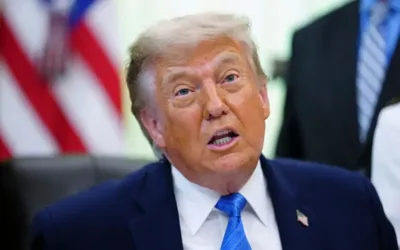
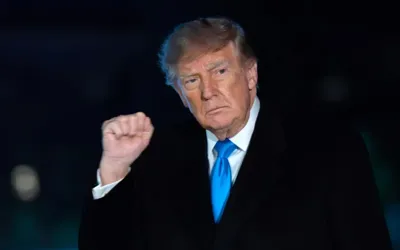
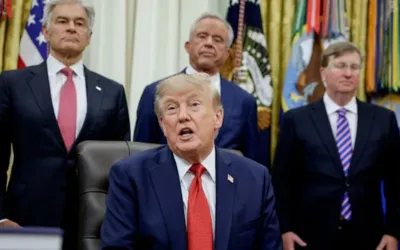
DALLAS: Donald Trump is putting himself front and center in the fight for Congress, turning a Republican gathering in Dallas into a high-stakes pitch to voters ahead of November’s midterm elections.
Speaking at the party’s first-ever midterm convention Wednesday, Trump proposed giving every American adult a $5,000 “Trump dividend” if Republicans retain control of Congress. The extraordinary proposal came as Republicans try to energize their base while facing voter concerns over inflation, the cost of living and the war with Iran.
Trump did not explain how the payments would be funded or whether he has the legal authority to make them. With roughly 270 million U.S. adults, the proposal could cost about $1.35 trillion.
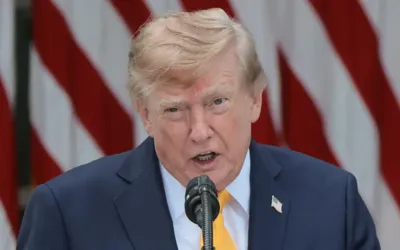
The president spent nearly 1 hour, 45 minutes outlining his record and urging voters to keep Republicans in power. He portrayed the election as a choice between his administration and what he called a “radical left” Democratic Party.
“We hand America’s future to the radical left Democrats, and our nation will spend the next decade just getting back on its feet,” Trump said. “Vote Republicans, and we will leave the world in our dust for generations to come.”
Trump also made clear that he intends to make the midterms a referendum on his presidency, boasting that he had completed “the greatest two years in the history of the presidency.”
“I’m asking you to pretend that I’m on the ballot,” he told the crowd.
The two-day Dallas convention underscores how heavily Republicans are relying on Trump as they prepare for the Nov. 3 elections.
Republican National Committee Chairman Joe Gruters jokingly called the gathering “Trumpapalooza,” reflecting the president’s outsized presence at an event designed to showcase Republican candidates and campaign priorities.
Trump said he plans to visit battleground states and competitive congressional districts repeatedly during the eight weeks before Election Day.
That strategy carries risks for Republicans in closely contested races. Candidates must balance Trump’s appeal among his most loyal supporters with the need to win over independents and swing voters who may be less enthusiastic about the president.
Some Republicans facing difficult races stayed away from the convention, including Rep. Tom Barrett of Michigan, Sen. Dan Sullivan of Alaska and Sen. Susan Collins of Maine.
Others chose to embrace Trump. At least 16 candidates in competitive House and Senate races were scheduled to speak, according to the RNC schedule.
Among Wednesday’s speakers were Texas Attorney General Ken Paxton, a Trump ally running a competitive Senate race against Democratic state lawmaker James Talarico, and Ohio Sen. Jon Husted, who faces former Sen. Sherrod Brown.
Trump called the 21,000-seat arena “packed,” although much of the upper seating remained empty during his speech.
While Republican officials had described the convention as a chance to highlight Trump’s policies, many speakers focused instead on attacking Democrats as extreme.
Speakers repeatedly labeled Democrats “socialists” and “communists” and emphasized issues including border security and transgender women in sports.
But concerns that polls consistently show near the top of voters’ agendas particularly the cost of living and the war with Iran received less attention.
Ernie Yarbrough, an Alabama state representative attending the convention, said voters want clearer answers about the conflict with Iran, including its potential duration and the administration’s objectives.
“People want to feel like we’re not getting stuck in an endless cycle,” Yarbrough said.
Trump defended the U.S. decision to strike Iran, saying the action was necessary to prevent Tehran from developing a nuclear weapon. He also predicted oil prices would fall “as soon as we win the war with Iran.”
The conflict, however, has shown little sign of ending more than six months after the United States and Israel launched strikes on Iran. Analysts have questioned whether Iran’s nuclear program has been eliminated, while Tehran denies seeking a nuclear weapon.
Trump later predicted the war would end “immediately after” the midterm elections, arguing that Iran was trying to influence the vote but could not withstand continued U.S. economic pressure.
“I think war is going to end immediately after the election because they can’t hold out any longer,” Trump told reporters before leaving for Dallas. “They’re desperate to try and affect the election.”
Republican attacks on Democrats continued throughout the convention, with Sen. Tim Scott of South Carolina, chairman of the party’s Senate campaign arm, calling Democrats “dangerous, radical and weird.”
The program also featured an unexpected appearance by Democratic Sen. John Fetterman of Pennsylvania, who introduced Republican Sen. Dave McCormick in a prerecorded video as his “great friend.”
Fetterman said he would work with Trump to protect Pennsylvania’s steel industry, highlighting his growing disagreements with the Democratic Party’s left wing. He has denied speculation that he could leave the party.
His appearance offered Republicans an opportunity to spotlight divisions within Democratic ranks as the midterms approach.
Republicans face the possibility of losing control of at least one chamber of Congress, while public polling indicates Democrats are more motivated to vote and Trump’s approval ratings have fallen sharply.
A Reuters/Ipsos poll has also pointed to weaker enthusiasm among Republicans, adding pressure on the party to mobilize its base.
The Dallas convention is intended to help candidates draw a sharp contrast with Democrats and persuade Republican voters to turn out despite economic concerns and dissatisfaction over the Iran war.
Trump’s $5,000 dividend proposal could give the campaign another powerful talking point, but its enormous potential cost and unanswered legal and funding questions could make it a subject of intense debate.
The convention also faced competition from the opening night of the NFL season, including a Super Bowl rematch between the New England Patriots and Seattle Seahawks.
Still, Trump’s message in Dallas was unmistakable: He wants the midterm elections to be fought on his terms, with his presidency and Republican control of Congress closely tied together.