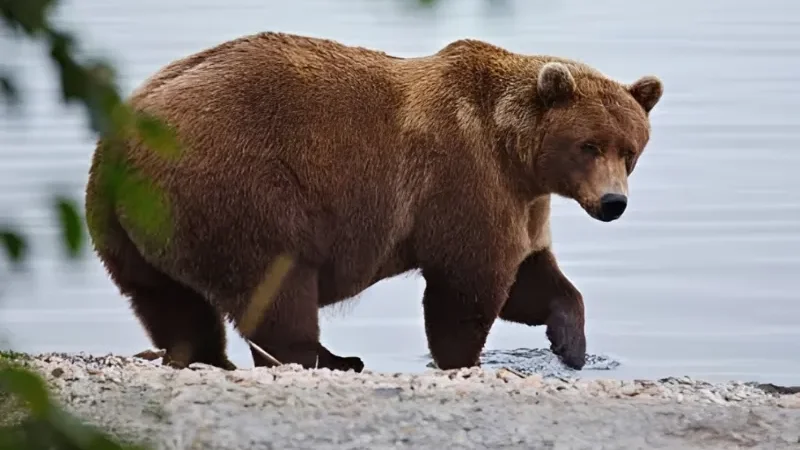
ALASKA: The fattest bear in Alaska could soon become the nation’s newest star as "Fat Bear Week" returns on Tuesday, Sept. 22, to Katmai National Park and Preserve, where 16 brown bears will compete for the 2026 championship in an online contest celebrating the survival skills behind their impressive size.
The annual competition begins Sept. 22 and runs through Sept. 29, when voters will choose the bear they believe has done the best job preparing for the long winter ahead. Voting takes place during scheduled matchups, with the public deciding which bears advance through the bracket.
The goal of Fat Bear Week is to promote bear conservation, cultivate an interest in wildlife, and encourage positive human-nature interactions
For Katmai’s brown bears, gaining weight is a matter of survival. During the summer, the bears spend months eating salmon and other available food to build up fat reserves before retreating to their dens for winter. They can lose up to one-third of their body weight during hibernation, making those extra pounds essential.
Chunk returns to defend his title:
One of the biggest names in this year’s competition is Bear 32, known as “Chunk,” the 2025 Fat Bear Week champion. Chunk returned to the Brooks River in 2025 with a broken jaw. Despite the serious injury, he continued feeding successfully and gained enough weight to survive the winter.
The National Park Service says the injury has healed but remains visible on the right side of his muzzle. Last year, more than 1.7 million votes were cast from more than 100 countries before Chunk was crowned champion, according to the National Park Service.
Chunk will face a field that includes several other large and experienced bears. Bear 164, known as Bucky Dent, has attracted attention for his size, fishing ability and growing dominance along the Brooks River. He is still a relatively young bear but has already developed into a powerful salmon fisherman.
Bear 151, known as Walker, is another familiar face at Brooks River. Bear 903 as Gully, is also competing. Gully is the son of two-time Fat Bear Week champion Grazer and has become known for eating more than just salmon, including gulls.
The competition also includes mothers with cubs, showing that competition is not simply a contest between the largest adult males. Among the mothers are Bear 132 with three spring cubs, Bear 284, known as Electra, with two cubs, Bear 806 with mixed-age cubs and Bear 901 with a spring cub.
Fat Bear Week began in 2014 as a way to show how dramatically Katmai’s brown bears change during the summer. Katmai’s Brooks River provides an abundant supply of salmon, which are a key part of the bears’ diet and the wider ecosystem.
Fans can also watch Katmai’s bears through live webcams and learn more about their lives throughout the year.
For the bears of Katmai, however, the real prize is not a championship title. It is having enough food and fat reserves to make it through another harsh Alaska winter.