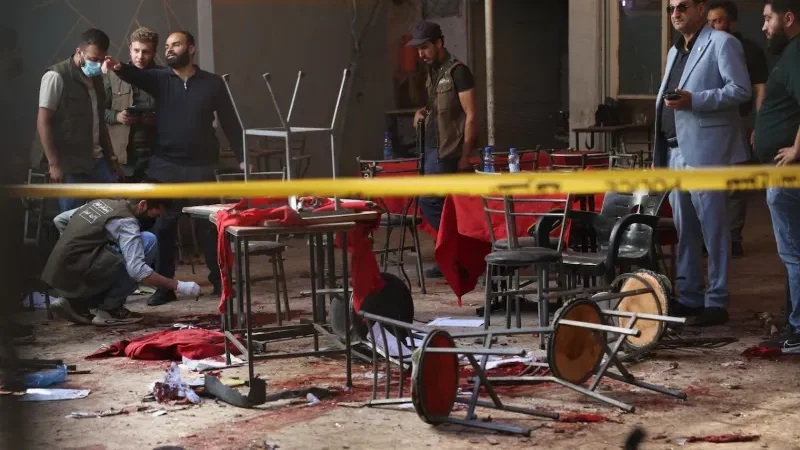
Central Damascus was shaken by a deadly cafe explosion on Thursday that killed nine people and left 20 injured, marking another serious security breach in the Syrian capital.
According to Syria’s Interior Ministry and state media, an explosive device had been planted inside a crowded cafe near the Palace of Justice in the city centre.
Authorities said preliminary findings indicated the device was a crude improvised explosive weighing about one kilogram and packed with metal shrapnel, causing significant casualties and damage.
Damascus Governor Maher al-Dibsi confirmed that an investigation had been launched and described the device as locally made. He said security forces were working to identify those responsible for the attack.
State media reported that emergency teams rushed to the site immediately after the blast, while ambulances transported the injured to nearby hospitals. Security forces cordoned off the area as rescue operations continued.
Eyewitnesses described scenes of panic following the explosion. Local shopkeepers said the blast shook nearby buildings and prompted people to rush toward the cafe, where victims were found inside. One witness said the scene reminded him of earlier periods of conflict in the city.
Videos circulating on social media showed wounded individuals and blood inside the cafe, though Reuters said it could not independently verify the footage.
The attack adds to growing security concerns in Syria following the ouster of former President Bashar al-Assad in late 2024 and the formation of a new government under President Ahmed al-Sharaa. Assad’s removal ended more than 14 years of civil war, but sporadic violence has continued.
Since the transition, Damascus has witnessed several attacks, including a car bombing outside the Defence Ministry in May that killed one soldier and injured at least 18 others, and a church bombing in June 2025 that left 25 people dead.
Although no group has claimed responsibility for Thursday’s blast, security analysts say the Islamic State group has attempted to exploit security gaps by activating sleeper cells and carrying out insurgency-style attacks.
Despite being significantly weakened since losing its territorial control in 2019, the group remains capable of deadly operations and is considered a major threat by regional and Western officials.
Authorities also continue to face instability from remnants of the former Assad-era forces and other armed groups involved in intermittent clashes.
Officials said investigations into the blast are ongoing, and further details will be released as they emerge.