Tuesday, November 3, 2026
Watch Live
UPDATED
FUEL PRICE
03-NOV-2026
PETROL
▼ -3.40 PKR
Rs. 374.51/ltr
DIESEL
▼ -7.76 PKR
Rs. 395.20/ltr
Headlines
US midterms put Trump’s political standing to the test Federal govt announces reduction in petroleum prices Cyberattack affects dozens of supermarkets across Europe Simple egg white face mask for your skincare routine 'Meer-e-Karwan Tum Ho' conference highlights climate challenges Major tech companies resist Trump's latest tariff push against Vietnam Netflix crime thriller 'Collision Course' tops global charts after release Field Marshal Asim Munir, Liu Haixing discuss bilateral ties at GHQ Sindh bans CNG, LPG cylinders in school vans Bird flu outbreak spreads across US poultry farms, infects 1.32m birds Pakistan fined 5% of match fees for slow over-rate in tri-nation final Pakistan to deregulate LPG pricing, add targeted subsidies Pakistan explores tokenizing Eurobond debt, Finance Minister says Karachi to get first mechanical garbage transfer system Pakistan bound LNG carrier attacked near Strait of Hormuz despite Iranian clearance US consortium proposes $4.4 billion LNG project in Pakistan US midterms put Trump’s political standing to the test Federal govt announces reduction in petroleum prices Cyberattack affects dozens of supermarkets across Europe Simple egg white face mask for your skincare routine 'Meer-e-Karwan Tum Ho' conference highlights climate challenges Major tech companies resist Trump's latest tariff push against Vietnam Netflix crime thriller 'Collision Course' tops global charts after release Field Marshal Asim Munir, Liu Haixing discuss bilateral ties at GHQ Sindh bans CNG, LPG cylinders in school vans Bird flu outbreak spreads across US poultry farms, infects 1.32m birds Pakistan fined 5% of match fees for slow over-rate in tri-nation final Pakistan to deregulate LPG pricing, add targeted subsidies Pakistan explores tokenizing Eurobond debt, Finance Minister says Karachi to get first mechanical garbage transfer system Pakistan bound LNG carrier attacked near Strait of Hormuz despite Iranian clearance US consortium proposes $4.4 billion LNG project in Pakistan

Azerbaijan's President foresees closer peace with Armenia than ever before

Azerbaijan's President foresees closer peace with Armenia than ever before

  • The South Caucasus neighbors have conducted numerous talks, including two days of negotiations in Berlin in February.
  • The initial war in 1988 between Armenia and Azerbaijan over Nagorno-Karabakh began in 1988.
  • Azerbaijan recaptured Karabakh in September, leading to a mass exodus of ethnic Armenians to neighboring Armenia.
On Sunday, Azeri President Ilham Aliyev declared that his country is "closer than ever" to reaching a peace deal with Armenia, half a year after Azerbaijan regained control of its Karabakh region from its ethnic Armenian majority, leading to a mass exodus of ethnic Armenians.

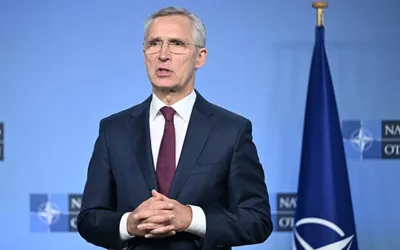
“Today, we are in an active phase of peace talks with Armenia,” Aliyev said in remarks after meeting NATO Secretary General Jens Stoltenberg in Baku, according to a transcript published on the Azeri leader’s website.

“We are now closer to peace than ever before.”

Stoltenberg expressed his welcome for the move toward peace between the two nations.

“I appreciate what you say about that you are closer to a peace agreement than ever before,” Stoltenberg said, according to a transcript published on NATO’s website.

“And I can just encourage you to seize this opportunity to reach a lasting peace agreement with Armenia.”

In December, the South Caucasus neighbors issued a joint statement declaring their intention to reach a peace deal and have since conducted numerous talks, including two days of negotiations in Berlin in February. Reuters' request for comment on Aliyev's statement was not immediately responded to by the press office of Armenian Prime Minister Nikol Pashinyan.

In 1988, Christian Armenia and mostly Muslim Azerbaijan initially engaged in war over the breakaway region of Nagorno-Karabakh. After decades of enmity, Azerbaijan recaptured Karabakh in September, despite its ethnic Armenian majority controlling it since the 1990s, despite international recognition as part of Azerbaijan.

The offensive led to most of the region’s 120,000 ethnic Armenians fleeing to neighboring Armenia. Armenia characterized the offensive as ethnic cleansing, while Azerbaijan refuted the claim, stating that those who fled had the option to stay and be integrated into Azerbaijan.

Key elements in securing a treaty include demarcating borders and establishing regional transport corridors through each other’s territory. Armenia has also brought up the issue of determining control of ethnic enclaves on both sides of the border.

[embedpost slug="azerbaijan-visit-latest-fee-update-for-pakistan-citizens-nov-2023/"]
Recommended