Tuesday, November 3, 2026
Watch Live
UPDATED
FUEL PRICE
03-NOV-2026
PETROL
▼ -3.40 PKR
Rs. 374.51/ltr
DIESEL
▼ -7.76 PKR
Rs. 395.20/ltr
Headlines
US midterms put Trump’s political standing to the test Federal govt announces reduction in petroleum prices Cyberattack affects dozens of supermarkets across Europe Simple egg white face mask for your skincare routine 'Meer-e-Karwan Tum Ho' conference highlights climate challenges Major tech companies resist Trump's latest tariff push against Vietnam Netflix crime thriller 'Collision Course' tops global charts after release Field Marshal Asim Munir, Liu Haixing discuss bilateral ties at GHQ Sindh bans CNG, LPG cylinders in school vans Bird flu outbreak spreads across US poultry farms, infects 1.32m birds Pakistan fined 5% of match fees for slow over-rate in tri-nation final Pakistan to deregulate LPG pricing, add targeted subsidies Pakistan explores tokenizing Eurobond debt, Finance Minister says Karachi to get first mechanical garbage transfer system Pakistan bound LNG carrier attacked near Strait of Hormuz despite Iranian clearance US consortium proposes $4.4 billion LNG project in Pakistan US midterms put Trump’s political standing to the test Federal govt announces reduction in petroleum prices Cyberattack affects dozens of supermarkets across Europe Simple egg white face mask for your skincare routine 'Meer-e-Karwan Tum Ho' conference highlights climate challenges Major tech companies resist Trump's latest tariff push against Vietnam Netflix crime thriller 'Collision Course' tops global charts after release Field Marshal Asim Munir, Liu Haixing discuss bilateral ties at GHQ Sindh bans CNG, LPG cylinders in school vans Bird flu outbreak spreads across US poultry farms, infects 1.32m birds Pakistan fined 5% of match fees for slow over-rate in tri-nation final Pakistan to deregulate LPG pricing, add targeted subsidies Pakistan explores tokenizing Eurobond debt, Finance Minister says Karachi to get first mechanical garbage transfer system Pakistan bound LNG carrier attacked near Strait of Hormuz despite Iranian clearance US consortium proposes $4.4 billion LNG project in Pakistan

Solar eclipse on August 2, 2027, 6 minutes of darkness

Solar eclipse on August 2, 2027, 6 minutes of darkness

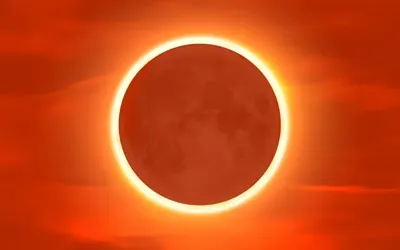
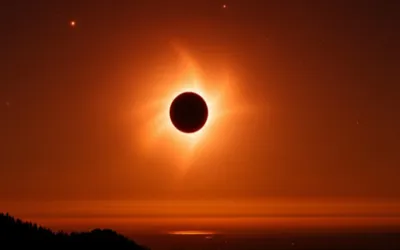
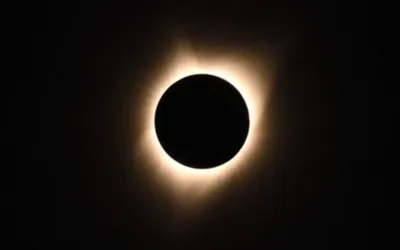
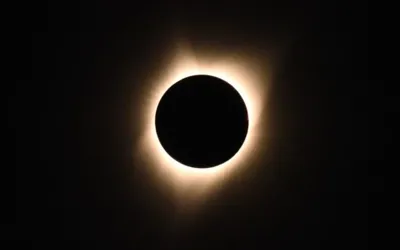
On August 2, 2027, a total solar eclipse will dazzle the skies, offering up to 6 minutes and 23 seconds of total darkness. This will be the longest total solar eclipse visible from land between 1991 and 2114, making it a once-in-a-century astronomical event.

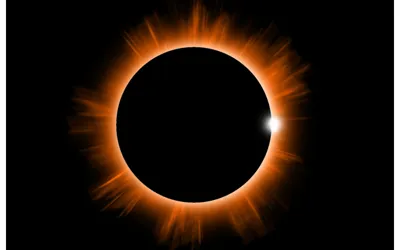
During this extraordinary eclipse, the Moon will completely obscure the Sun, plunging parts of the Earth into temporary darkness in the middle of the day. Observers along the eclipse’s path of totality will witness the dramatic darkening of the sky, the emergence of stars, and the breathtaking glow of the Sun’s corona—the outer atmosphere of the Sun.

Where to Witness the Phenomenon?

The eclipse’s path will traverse the Atlantic Ocean, then sweep across several countries, including southern Spain, northern Morocco, Algeria, Tunisia, Libya, central Egypt, Sudan, Saudi Arabia, Yemen, and Somalia. The shadow, approximately 258 kilometers wide, will make landfall over these regions before ending over the Indian Ocean near the Chagos Archipelago.

Notably, cities like Luxor in Egypt are expected to experience over six minutes of total darkness—a rare and remarkable duration for a total eclipse. The best viewing conditions are anticipated in areas with typically clear and dry skies, such as Libya and Egypt.

Local eclipse timing varies. In southern Spain, totality is expected between 1:30pm and 2:00pm CEST, And in Egypt and Libya, the peak will occur between 2:00pm and 2:30pm EET.

India will largely miss the event, with only parts of its far western edge possibly seeing a faint partial eclipse near sunset.

The 2027 eclipse is an extraordinary celestial event due to a rare alignment of factors. Earth will be near its aphelion, the point where it is farthest from the Sun, causing the Sun to appear slightly smaller in the sky.

Simultaneously, the Moon will be at perigee, its closest approach to Earth, making it appear larger and more prominent. The eclipse’s path will traverse near the equator, resulting in the Moon’s shadow moving more slowly across Earth's surface and thereby extending the duration of totality.

This unique combination of conditions makes the 2027 total solar eclipse a must-see event for astronomers, sky enthusiasts, and anyone eager to witness a breathtaking display of nature’s grandeur.
Recommended