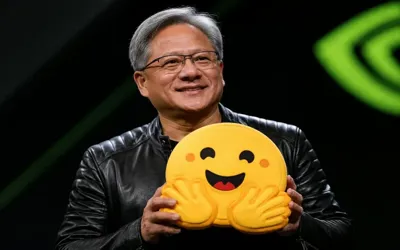
NEW YORK: Nvidia CEO Jensen Huang has resigned from his position and the company's board following reports alleging his involvement in a personal relationship with a woman suspected of facilitating the transfer of the chipmaker's technology to Chinese companies.
The reported controversy has rattled the technology giant, wiping hundreds of billions of dollars off its market value, while its shares plunged 10% in premarket trading Thursday.
Huang, 63, co-founded Nvidia in 1993 and helped transform it into one of the world's most valuable technology companies, with a reported market capitalization of around $4 trillion. He holds approximately 3.61% of the company's shares, making him its fourth-largest investor, according to the report.
In a statement announcing his departure, Nvidia said Huang's contributions to the company and the technology industry had been profound, thanking him for his leadership and achievements.
The report identified Alice Huang, a former Megaspeed director with no family connection to the CEO, as the woman at the center of the controversy. US intelligence officials have reportedly alleged that she facilitated shipments of Nvidia chips to Chinese companies as part of a foreign intelligence operation. China has rejected the espionage allegations as unsubstantiated.
Colette Kress, Nvidia's executive vice president and chief financial officer, will serve as interim CEO until a permanent successor is appointed. The board has begun searching for a replacement and will consider both internal and external candidates.
Harvey Jones, chairman of Nvidia's board, expressed confidence in Kress and the company's existing leadership team, saying business operations, customer commitments and product development would continue without interruption.
The controversy intensified after reports by The New York Times alleged that Huang had also been involved in a relationship with Kimberly Powell, Nvidia's vice president of healthcare.
Huang reportedly acknowledged being unfaithful to his wife in a memo sent to employees Sunday, expressing deep regret without providing further details.
Nvidia's board subsequently launched an internal investigation led by law firm Wachtell, Lipton, Rosen & Katz.
The fallout has also drawn attention in Washington. Reports said Secretary of State Marco Rubio had warned President Donald Trump about concerns surrounding Huang's position before the executive joined a U.S. delegation visit to Beijing in May.
Republican leaders of three House committees have called for Huang to provide closed-door testimony about his interactions with the woman suspected of having intelligence links.
Democratic senators Elizabeth Warren and Chris Coons have also written to Commerce Secretary Howard Lutnick, demanding the preservation of company records concerning Nvidia's business dealings with China.
Jeffrey Sonnenfeld, a corporate governance expert at Yale School of Management, told NBC News that the controversy had undermined Huang's credibility among employees, customers and other stakeholders.
Huang's reported departure marks a significant leadership development for Nvidia, a company at the center of the global artificial intelligence boom and the growing technology competition between the United States and China.