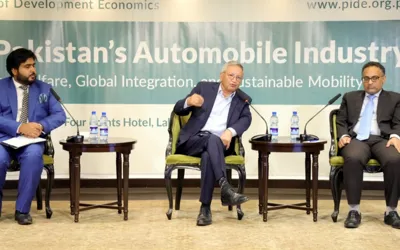
- The demand side for reforms has historically remained remarkably passive throughout the country's history: PIDE VC
- There is no discussion among political parties to provide a clear reform agenda keeping in view the country’s needs: Nadeem ul Haque
- True decentralization can only be achieved by granting autonomy to locally elected councils in their spending and planning decisions. Durre Nayab
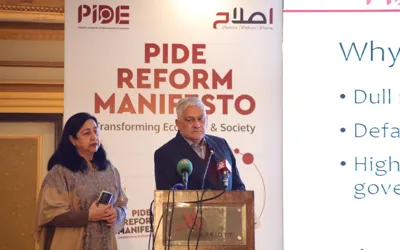
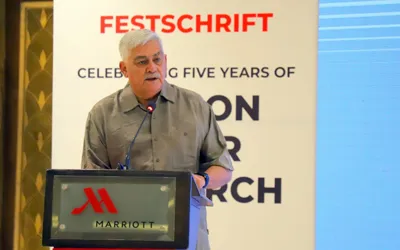
Despite successive governments' promises of transformative change and substantial reforms, the efforts undertaken appear akin to attempting to bail out a sinking ship with a thimble. The enduring consequence is shouldered by the people of Pakistan, who continue to bear the brunt of these challenges. These sentiments were articulated by Dr. Nadeem ul Haque, Vice Chancellor of the Pakistan Institute of Development Economics (PIDE), during the opening of the Third Think Tank Moot, a collaborative initiative by PIDE and its partners.
Dr. Haque underscored the crucial need to recognize the historically passive nature of the demand side for reforms throughout the country's history. Addressing this passivity, he argued, is pivotal in fostering a more engaged and participative society as the nation seeks a path towards sustainable and impactful reforms. Dr. Haque further noted that political party manifestos often highlight broad policy directions and commitments. Ideally, these commitments should be thoroughly evaluated when a party assumes power. With the upcoming General Elections scheduled for the 8th of February 2024, it is disheartening to observe the absence of discussions among political parties regarding a clear reform agenda aligned with the country's pressing needs.
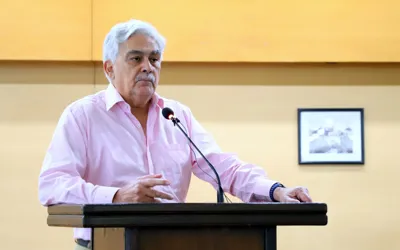
PIDE Pro VC Dr. Durre Nayab delivered a compelling address at a recent Think Tank Moot, highlighting crucial perspectives on urban development and governance. Dr. Nayab stressed the paramount importance of respecting the heterogeneity of cities, underlining the need for policies that cater to the unique characteristics of each urban center. A critical observation surfaced concerning the challenges faced by vibrant cities within the existing governing structure, prompting the call for transformative policies to unlock the full potential of urban areas.
Emphasizing the instrumental role of local governments, Dr. Nayab asserted their key position in delivering essential services, advocating for a decentralized approach to address the specific needs of local communities. Notably, the Pro VC argued that true decentralization can only be achieved by granting autonomy to locally elected councils in their spending and planning decisions.
This perspective calls for a fundamental reevaluation of governance structures to empower local authorities and shape more responsive and vibrant urban environments. Dr. Durre Nayab's insights offer a compelling vision for a paradigm shift in urban policies, urging stakeholders to embrace diversity, overcome governance challenges, and empower local governments for effective decentralization.
Dr. Shujaat Farooq, Chief Research PIDE, earlier, provided background on the Think Tank Moot, highlighting its role as a unique platform for esteemed partners and thought leaders to collectively address transformative and sustainable reforms.
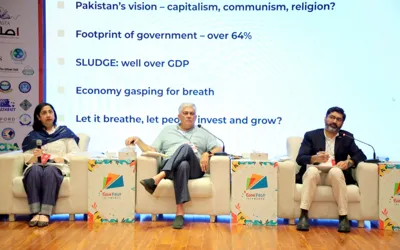
He said that the PIDE has formulated a reform agenda “Transforming Economy & Society” identifying ten priority themes i.e., political stability, reforms in civil service, productivity and competition, fiscal management, building social infrastructure, market efficiency, etc. In this context, PIDE organized 4th moot with Think-Tanks and Partners to present its reform agenda. The idea is to have a collective intellectual capital and action, instead of working in silos, with minimum to zero influence over policy-making.
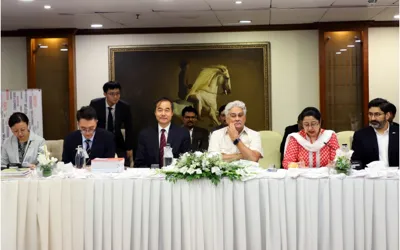
During the Moot, speakers from different think tank underscored the significance of transforming the economy and society in Pakistan, emphasizing the multifaceted nature of this imperative endeavor. They stressed that addressing the challenges and opportunities faced by the nation requires a comprehensive and collaborative approach. There was a unanimous acknowledgment and praise for PIDE's Reform Agenda, recognizing it as the need of the hour for Pakistan. Participants voiced a collective concern that if attention is not directed towards these critical issues now, the consequences may become insurmountable in the future. The urgency of embracing reform for the betterment of Pakistan was emphasized, with the consensus that proactive measures are essential to avoid reaching a point of no return.
Representatives from various organizations convened, creating a diverse assembly that included Shifa Tameer-e-Millat University, National University of Science and Technology (NUST), Pakistan Poverty Alleviation Fund (PPAF), Pakistan Science Foundation, Quaid-i-Azam University, American Fishing Tackle Manufacturers Association (AFTMA), Akhtar Hameed Khan National Centre for Rural Development (AHKNCRD), Centre for International Strategic Studies (CISS), National Institute of Population Studies (NIPS), Institute of Strategic Studies Islamabad (ISSI), World Bank, Sustainable Development Policy Institute (SDPI), COMSATS, Establishment Division, Islamabad Policy Research Institute (IPRI), Prime Consultant, IIIE Institute of Islamic Information and Education, National Rural Support Programme (NRSP), Population Council, Centre for Aerospace & Security Studies (CASS), Independent News Pakistan (INP) Benazir Income Support Program (BISP), NUML, Beijing Institute of Technology, and National Commission on the Status of Women (NCSW). This gathering reflected a broad spectrum of expertise and perspectives across academia, research, policy, and international relations