Afghanistan is one of the most earthquake-prone countries in the world, regularly experiencing tremors that result in devastating loss of life and infrastructure damage. The country’s vulnerability to seismic activity stems largely from its geographic location, where several active fault lines mark the boundary between the Indian and Eurasian tectonic plates.
A High-Risk Zone:
Afghanistan sits on the collision zone between two major tectonic plates: the Indian plate pushing northward into the Eurasian plate.
This ongoing geological process creates immense pressure along fault lines, leading to frequent earthquakes. These quakes are often shallow, which makes them particularly destructive.
Previous Disasters:
2025:
• August 27 – A magnitude 5.6 earthquake hit Afghanistan's Hindu Kush region. • August 19 – A magnitude 5.2 earthquake struck Afghanistan's Hindu Kush region at a depth of 186 km (115 miles). • April 16 – A magnitude 5.6 earthquake hit the Hindu Kush region. • April 19 – A magnitude 5.8 earthquake struck the Afghanistan–Tajikistan border region.
2024:
• October 17 – A magnitude 5.5 earthquake struck the Hindu Kush region in Afghanistan. • February 19 – A magnitude 5.5 earthquake hit northwestern Kashmir (within the Afghan region). • January 11 – A magnitude 6.3 earthquake struck the Hindu Kush region in Afghanistan. • January 5 – A magnitude 5.0 earthquake hit the Afghanistan–Tajikistan border region.
2023:
• November 15 – A magnitude 5.3 earthquake struck the Afghanistan–Tajikistan border region. • October – Multiple deadly earthquakes rattled Afghanistan. • August 6 – A magnitude 5.1 earthquake hit the Afghanistan–Tajikistan border region. • August 5 – A magnitude 5.7 earthquake hit the Hindu Kush region in Afghanistan. • May 3 – A magnitude 5.6 earthquake struck the Hindu Kush region in Afghanistan. • Late March – A magnitude 6.5 earthquake hit northern Afghanistan, killing at least 13. • January 5 – A magnitude 5.8 earthquake hit the Hindu Kush region in Afghanistan.
2022:
• December 16 – A magnitude 4.3 earthquake hit southeastern Afghanistan. • September 5–6 – At least two earthquakes struck Afghanistan, killing at least eight. • June – A magnitude 6.0 earthquake in Afghanistan killed more than 1,000 people. • February 5 – A magnitude 5.7 earthquake struck the Hindu Kush region in Afghanistan. • January 17 – A magnitude 5.6 earthquake (30 km deep) hit western Afghanistan.
2021:
• May 19 – A magnitude 4.6 earthquake, at a depth of 17.6 km, shook Afghanistan.
Vulnerable Communities and Fragile Infrastructure:
Much of Afghanistan's population lives in remote mountain villages, where homes are often built from mud brick, timber, or weak concrete. These traditional structures are not resistant to seismic forces, increasing the risk of collapse during earthquakes.
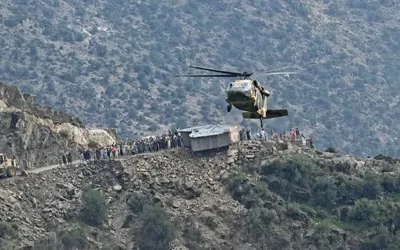
Landslides triggered by quakes add to the devastation, cutting off roads and making it extremely difficult for rescue teams to reach affected areas.
Seismic activity remains ongoing in the region. In August 2025, the Hindu Kush region experienced magnitude 5.6 and 5.2 earthquakes. Central Pakistan also recorded tremors in June and May of the same year. This ongoing tectonic unrest highlights the constant threat faced by people living in and around Afghanistan.
Given the geological realities, Afghanistan is likely to continue experiencing destructive earthquakes. Strengthening building codes, improving early warning systems, and investing in infrastructure designed to withstand seismic events are crucial steps toward reducing the human toll of future disasters.
Learning from the Region:
Other countries in the region have shown that improved earthquake resilience is possible, even under similar socio-economic conditions.
In Nepal, following the 2015 Gorkha earthquake, the government introduced minimum seismic safety standards in its National Building Code, offering practical construction guidelines that enhance earthquake resistance — even for basic, non-engineered homes.
Over 25 years ago, Indian earthquake engineer Anand Arya developed an approach to strengthening traditional buildings. His methods include adding continuous horizontal bands around walls, and reinforcing corners, doors, and windows — techniques that provide significant structural strength with minimal cost.
These examples show that improving earthquake safety doesn't always require large financial investments. Instead, a combination of technical knowledge, institutional support, and community engagement can make a critical difference.
Earthquakes Don’t Kill People — Buildings Do:
The oft-quoted phrase, “earthquakes don’t kill people, buildings do,” powerfully explains why so many lives are lost during earthquakes — particularly in places like Afghanistan.
In rural Afghan communities, poverty and limited access to industrial building materials mean that homes are often constructed using locally available resources like earth, stone, and raw lumber. These structures, made using mud bricks or stone masonry, fall under what's known as monolithic construction. Unfortunately, such buildings are rarely engineered to resist the lateral shaking forces produced by earthquakes. As a result, they are highly prone to collapse, often burying the occupants inside.
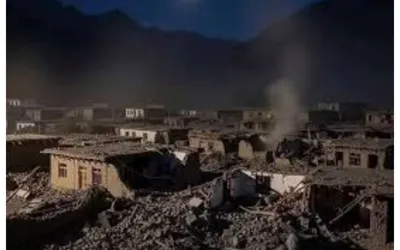
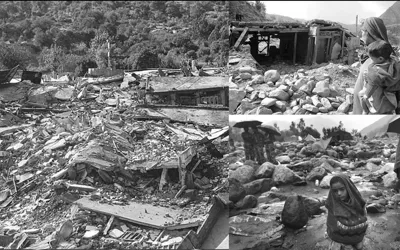
This pattern is tragically familiar. In previous Afghan earthquakes, widespread destruction has occurred in villages where homes crumbled into rubble, leaving little chance for survival.
A Call to Build Back Better in Afghanistan:
Afghanistan can learn from its neighbors. While it’s unrealistic to expect rural homes to be fully earthquake-proof, even basic reinforcements and design changes can prevent buildings from collapsing — saving countless lives.
This most recent earthquake could become a turning point, sparking efforts to introduce cost-effective, earthquake-resilient construction techniques. A “build back better” approach can help ensure that when the ground shakes again, Afghan communities will be better prepared — and better protected.