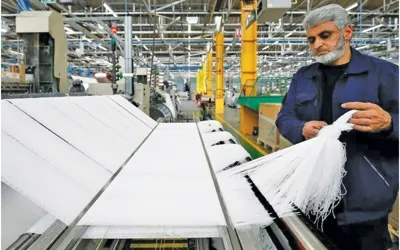
KARACHI: Pakistan’s textile and apparel exports rose 0.3% to $18 billion in fiscal year 2025-26, reaching their highest level in four years, according to the Pakistan Textile Council.
Textiles accounted for nearly 60% of Pakistan’s total exports during the year, highlighting the sector’s continued importance to the country’s export earnings.
Exports of apparel and home textiles and made-ups increased 1.1% to $14.98 billion, accounting for 83.2% of total textile exports.
Meanwhile, exports of raw materials and intermediate products fell 3.4% to $3.03 billion.
Non-knit apparel exports rose 3.9% to a record $4.295 billion. Exports of men’s cotton trousers increased 19%, while women’s cotton trousers rose 54%, according to the report.
Home textiles and made-ups remained the largest segment, with exports of $5.705 billion. Knitwear exports, however, declined 0.7% to $4.979 billion.
The European Union remained a major market for Pakistan’s textile products, with exports totaling $7.103 billion. Exports to the United States increased to $4.853 billion, while those to the United Kingdom stood at $1.730 billion.
Textile exports to China rose to $644 million, while exports to Bangladesh remained broadly stable at about $620 million.
The Pakistan Textile Council said cotton production had fallen to 5.5 million bales in the latest season, its lowest level in three decades. Pakistan produced a record 14.8 million bales in 2011-12.
The decline in domestic cotton production is being offset through imports, the council said.
The report also highlighted a weaker trend at the end of the fiscal year. Textile exports fell 17% year-on-year to $1.27 billion in June 2026 and declined 23% from the previous month.
The Pakistan Textile Council proposed 11 policy recommendations across six areas to strengthen the textile sector. The recommendations include reducing corporate income tax to 15%, speeding up the refunds system, ensuring competitive and reliable energy supplies, improving access to financing and strengthening support for small and medium-sized enterprises.
The council also called for efforts to negotiate free trade agreements with the United States and United Kingdom and urged the government to develop an integrated national strategy for cotton production.
The council said improving cotton seed quality, digitalizing farmers’ records and strengthening traceability could help revive domestic cotton production and support the long-term competitiveness of Pakistan’s textile industry.