LITTLETON: Natural gas and liquefied natural gas are fueling a major new investment wave across the global energy industry as rising power demand, growing renewable energy and pressure on oil and coal push governments and utilities toward gas.
Asia is driving much of the expansion, with huge amounts of gas-fired power capacity, pipelines and LNG facilities already operating. The shift is being driven by a simple challenge as countries need more electricity, but they also need reliable power when renewable sources such as wind and solar cannot meet demand. As a result, natural gas is becoming an increasingly important part of the world's changing energy system.
The growing infrastructure is creating a major boost for the gas industry at a time when oil and coal are facing greater pressure from electrification, improved energy efficiency and climate policies.
Asia takes the lead in 'gas-fired' power:
Global Energy Monitor data shows Asia has about 950,000 megawatts of gas-fired power capacity currently in operation. That is far more than Europe's roughly 366,000 megawatts and above the approximately 735,000 megawatts operating across the Americas.
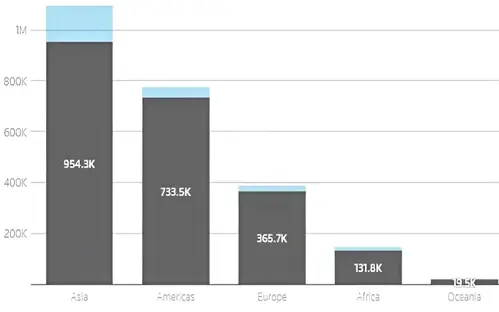
About 140,000 megawatts of additional gas-fired power capacity is under construction across Asia. That is more than three times the amount being built in any other region.
The United States has the world's largest operating gas-fired power capacity, at about 562,000 megawatts. China, however, is leading the world in gas-fired power capacity currently under construction.
Gas pipeline construction picks up speed:
The gas boom is not limited to power plants. Pipeline construction is also expanding as countries prepare to move larger amounts of natural gas between production areas, power plants and industrial centers.
The Americas have the world's largest operating gas pipeline network, with just under 490,000 kilometers of pipelines in service. Asia has about 281,000 kilometers, while Europe has roughly 262,680 kilometers.
But Asia is rapidly closing the gap.
Nearly 56,000 kilometers of new gas pipelines are under construction across Asia, giving the region the world's largest pipeline expansion program. China is leading the construction race with nearly 22,000 kilometers of new pipelines. India follows with almost 15,000 kilometers under construction.
Asia dominates the LNG import race:
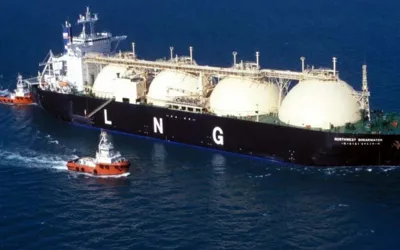
Asia is not only expanding its LNG infrastructure for exports. It is also the world's largest LNG-importing region.
The region accounts for more than 66% of existing global LNG import capacity and nearly 70% of LNG import capacity currently being built.
Japan has the world's largest existing LNG import infrastructure, with about 242 million metric tons of annual import capacity.
China is rapidly expanding its own network. About 97 million metric tons of annual LNG import capacity is currently under construction there.
The figures highlight Asia's growing importance in the global LNG market and show how quickly countries in the region are building infrastructure to secure future energy supplies.
The massive amount of money being invested in gas infrastructure could shape global energy markets for years to come. That could keep natural gas deeply connected to the global energy system even as countries add more renewable power and work toward cleaner energy sources. The growing investment also points to a major shift in how countries are preparing for rising electricity demand.